
The Best Dog Training App in 2026: How AI Plans Compare to Books, YouTube, and In-Person Trainers
The Best Dog Training App in 2026: How AI Plans Compare to Books, YouTube, and In-Person Trainers
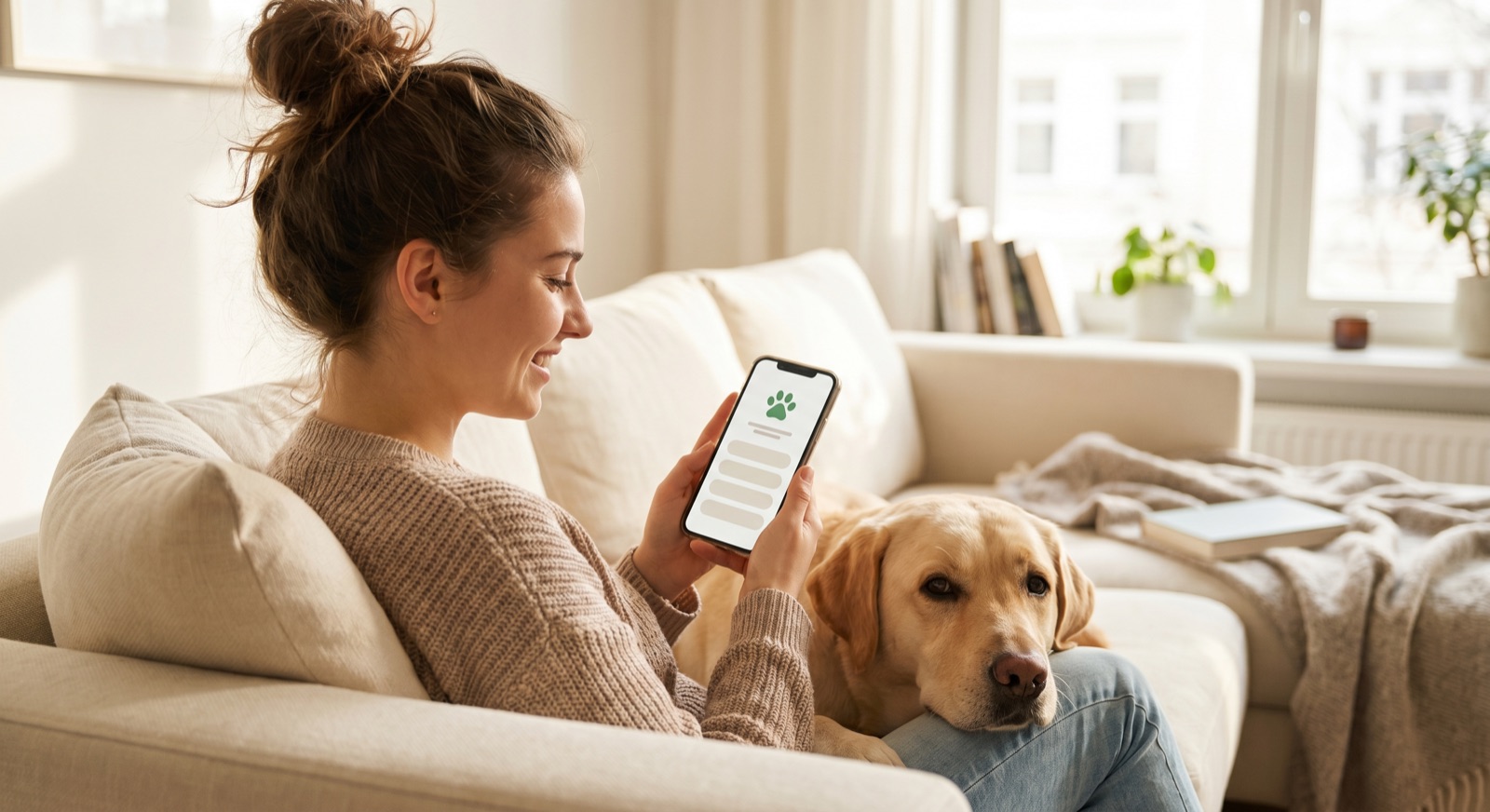
If you searched for the best dog training app, you already know the problem: there are dozens of them. Some are basic clicker apps. Some are paywalled subscription empires. Some are just video libraries pretending to be a coach. And none of them actually know your dog.
So instead of giving you a top-10 list that you can find on every other site, we're going to do something more useful: we'll explain what a dog training app actually needs to do well, where each format (apps, books, YouTube, in-person trainers) wins and loses, and what to look for if you want results in weeks, not years.
What "best" actually means for a dog training app
A dog training app is only "the best" if it does three things:
- Personalizes to your dog — breed, age, weight, energy level, current behaviors, lifestyle.
- Sequences the training — what to do in week 1 vs. week 4, with clear progressions.
- Adapts when something isn't working — alternative cues, troubleshooting, escalation.
Most apps fail on all three. They give you a 10-minute "intro to sit" video and call it a course. That's not training. That's a tutorial.
Books vs. YouTube vs. apps vs. trainers — honest tradeoffs
| Format | Best for | Real-world weakness | |---|---|---| | Books (e.g., Karen Pryor, Ian Dunbar) | Deep theory, lifelong reference | No daily plan, no troubleshooting for your dog | | YouTube | Free, visual technique demos | Contradictory advice, no curriculum, easy to confuse the dog | | Generic apps | Casual reminders, basic tracking | One-size-fits-all, no personalization, often paywall the useful parts | | AI-personalized plans (like AutoDoggy) | Custom step-by-step plan, on-demand AI trainer | Can't physically watch your dog — you still have to observe and adjust | | In-person trainers | Hands-on feedback, severe behaviors | $80–$200+ per session, hard to get consistent weekly access |
The honest answer is that the best app is the one that gives you a plan written for your specific dog and updates with you over time — not the one with the prettiest icon.
Why personalization matters more than content quality
Two scenarios. Same breed.
- Dog A: 14-month-old Border Collie, lives in a city apartment, owner works 9–5, dog has separation anxiety and pulls on leash.
- Dog B: 14-month-old Border Collie, lives on a 2-acre property, owner is retired, dog is bored and self-directs to herding the kids.
A book and a YouTube channel will tell you the same thing about both dogs: "Border Collies need exercise, mental enrichment, and consistent training." Not wrong. Not actionable.
A good AI-personalized plan would prescribe completely different first weeks for these two dogs:
- Dog A starts with a graduated separation protocol and front-clip harness work.
- Dog B starts with structured impulse-control games and a daily mental-enrichment rotation.
That's the difference between information and a plan.
What to look for in a dog training app
When you're evaluating any dog training app — including ours — check for these:
- Does it ask about your dog before showing you anything? If the first screen is generic, the rest will be too.
- Does it use force-free, positive-reinforcement methods? Avoid anything that recommends prong, choke, or shock collars.
- Can you ask follow-up questions? Static content can't troubleshoot. A coach (human or AI) can.
- Is the daily commitment realistic? 10–15 minutes, 2–3 times a day is the sweet spot for most dogs.
- Does it adapt as your dog progresses? Plans that don't change after week 1 are just PDFs.
How AutoDoggy stacks up
AutoDoggy is built around exactly the gap above. You answer a detailed questionnaire about your dog, our AI generates a structured 8-week training plan personalized to your dog, and the included AI trainer answers your questions during training, in context, with full knowledge of your dog's plan.
It is not a video library. It is not a book. It is a plan that adapts to your dog and a coach you can ask at 11 PM.
If you've tried apps that felt generic, books that felt overwhelming, or YouTube rabbit holes that left you more confused than when you started — that's exactly the experience we built AutoDoggy to replace.
Try it free with your dog's profile →
Frequently asked questions
Are AI dog training apps actually as good as a human trainer? For everyday training (sit, recall, leash walking, crate training, mild reactivity, separation anxiety basics), a well-designed AI plan can match or beat a generic group class. For severe aggression, complex behavioral issues, or service-dog work, you still want a certified in-person professional. Most owners benefit from combining both.
Is AutoDoggy a subscription? No. The Starter and Journey packages are one-time payments. Premium is an optional monthly subscription you can cancel anytime.
How fast will I see results? Most owners see meaningful behavior changes in 2–4 weeks of consistent practice. Loose-leash walking, crate comfort, and basic obedience usually show first.
Want a plan written for your dog instead of a generic app's idea of a Labrador? Build your dog's plan in a few minutes →