
Beyond Sit and Stay: Teaching Fun and Useful Tricks with Positive Reinforcement
Beyond Sit and Stay: Teaching Fun and Useful Tricks with Positive Reinforcement
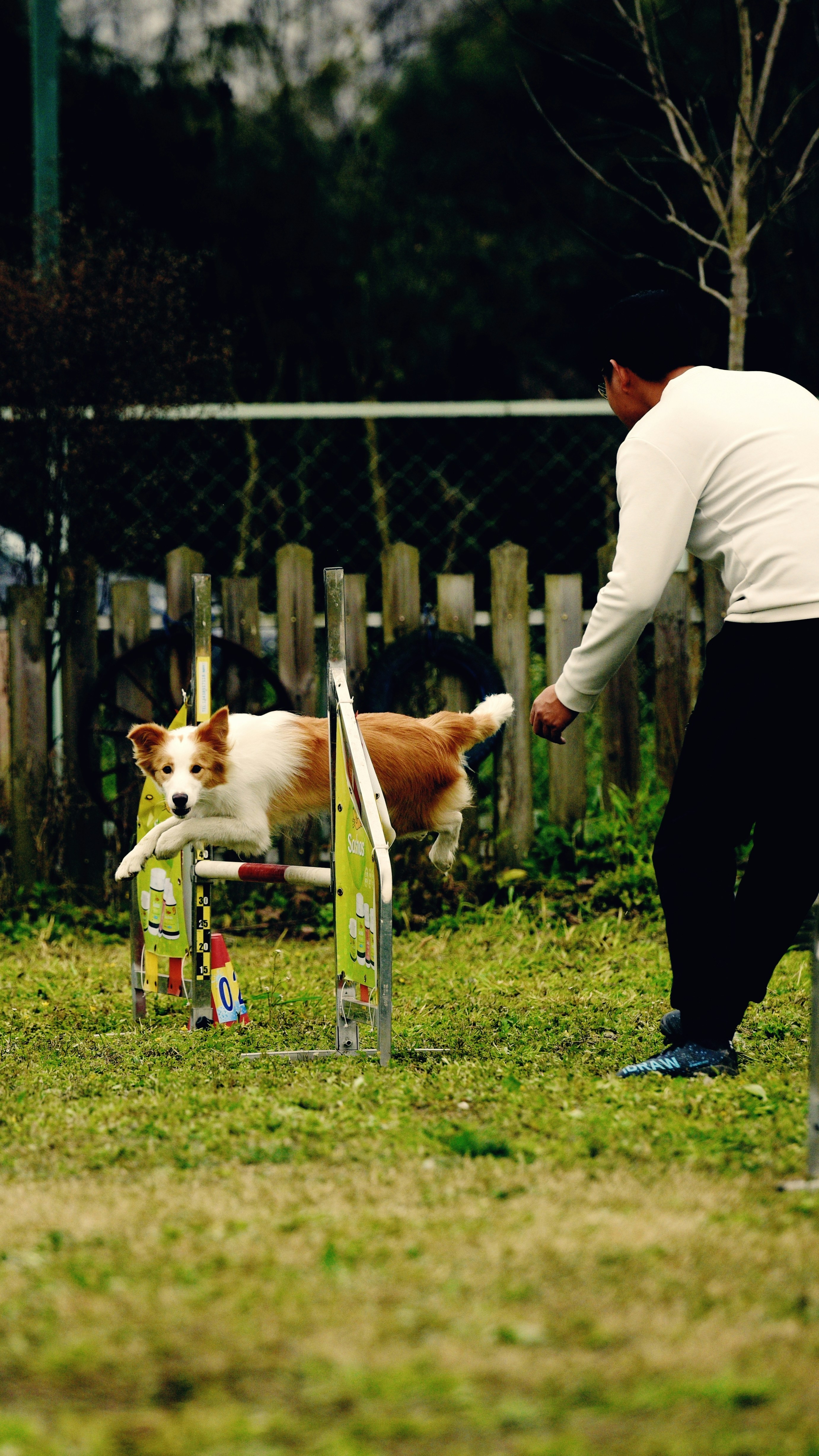
Basic obedience commands form the foundation of a well-mannered dog, but why stop there? Teaching your dog tricks goes beyond novelty or showing off—it provides invaluable mental stimulation, builds confidence, strengthens your bond, and can even develop skills useful in everyday life.
The best part? Dogs absolutely love trick training! The focused interaction, mental challenge, and positive reinforcement create an engaging activity that satisfies their cognitive needs in ways that physical exercise alone cannot. Whether you have a high-energy working breed or a laid-back companion dog, trick training offers benefits for every canine personality.
At AutoDoggy, we believe trick training should be accessible to all dogs and their humans. Let's explore how to move beyond basic commands into the rewarding world of dog tricks, using methods that make learning enjoyable for both ends of the leash.
Why Trick Training Matters: Benefits Beyond the "Wow Factor"
Trick training isn't just about impressing your friends (though that's certainly a fun bonus!). Consider these significant benefits:
Mental Stimulation and Enrichment
- Prevents boredom: Mentally tired dogs are typically calmer and less likely to develop problem behaviors
- Cognitive exercise: Challenges your dog's problem-solving abilities and learning capacity
- Outlet for intelligence: Particularly important for smart working breeds who need mental challenges
- Satisfies instinctual needs: Many tricks can channel natural behaviors into appropriate outlets
Relationship Building
- Communication development: Enhances the clarity and precision of signals between you and your dog
- Trust building: Creates positive learning experiences that strengthen your bond
- Quality time: Provides focused interaction that deepens your connection
- Teamwork development: Teaches you and your dog to work together toward common goals
Practical Benefits
- Body awareness: Many tricks improve your dog's coordination and physical awareness
- Confidence building: Success in learning new skills builds a dog's self-assurance
- Impulse control: Many tricks require self-control, reinforcing this valuable skill
- Versatility: Some tricks can be practically useful in everyday situations
Special Populations
- Senior dogs: Gentle trick training keeps aging minds sharp and engaged
- Reactive dogs: Provides focus and builds confidence in challenging environments
- Shy dogs: Builds confidence through success in a low-pressure environment
- Rehabilitation support: Certain tricks can support physical therapy goals
With so many benefits, trick training deserves a place in every dog's life!
The Principles of Successful Trick Training
Before diving into specific tricks, let's establish the fundamental principles that make trick training enjoyable and effective:
Use Positive Reinforcement
Trick training should always be fun, never forced. Positive reinforcement creates enthusiasm and preserves the joy of learning:
- Reward-based methods: Use treats, praise, play, or whatever motivates your dog
- Marker signals: A clicker or verbal marker ("yes!") precisely identifies correct behavior
- Timing matters: Rewards must come immediately after the desired behavior
- High rate of reinforcement: Frequent rewards maintain motivation during learning
- Variable reinforcement: Once a behavior is learned, occasional rewards maintain it strongly
Break Down Complex Behaviors
The most impressive tricks are built through small, achievable steps:
- Shaping: Reward progressively closer approximations of the final behavior
- Capturing: Catch and reward naturally occurring behaviors
- Luring: Use a food lure to guide your dog into position, then fade the lure
- Chaining: Connect simple behaviors into more complex sequences
- Backchaining: Teach the last part of a sequence first, then work backward
Set Up for Success
Create optimal learning conditions for your dog:
- Minimal distractions: Start in a quiet, familiar environment
- Short sessions: 3-5 minute training bursts maintain enthusiasm
- Physical readiness: Train when your dog is somewhat exercised but not exhausted
- Mental freshness: Choose times when your dog is alert and motivated
- Clear cues: Distinct verbal cues or hand signals for each behavior
Maintain a Positive Training Experience
The emotional component of training matters tremendously:
- End on success: Always finish with something your dog can do well
- Manage frustration: If either of you gets frustrated, simplify or take a break
- Celebrate progress: Acknowledge improvements, not just perfect execution
- Adapt to your dog: Modify techniques based on what works for your individual dog
- Keep it fun: If it stops being enjoyable, change your approach
10 Impressive Yet Achievable Tricks to Teach Your Dog
Let's explore some engaging tricks, ranging from beginner-friendly to more advanced, each with step-by-step training guidance:
1. Spin (Beginner Level)
A classic crowd-pleaser where your dog turns in a circle.
Training steps:
- With a treat, lure your dog's nose in a complete circle
- Mark and reward when they complete the circle
- After several successful repetitions, begin adding the verbal cue "spin" just before luring
- Gradually make the lure smaller, eventually just using a hand signal
- Practice in both directions (you can use "spin" for clockwise and "twirl" for counter-clockwise)
Practical benefits: Improves body awareness and coordination
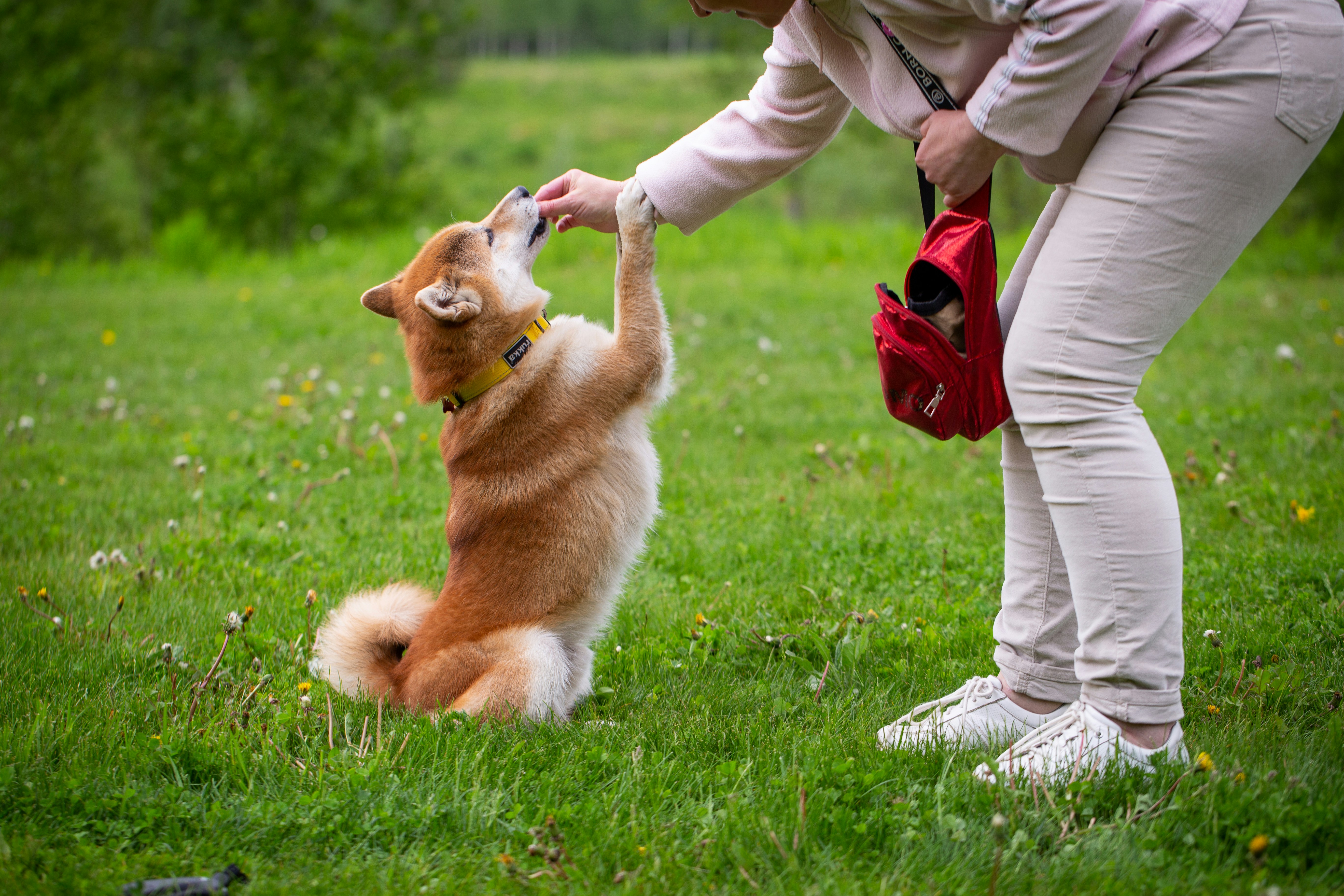
2. High-Five (Beginner Level)
Your dog raises their paw to touch your hand.
Training steps:
- With your dog sitting, hold a treat in your closed hand near their shoulder
- Wait for them to paw at your hand (most will try this naturally)
- Mark and reward the moment their paw touches your hand
- After several repetitions, begin opening your hand, palm facing them
- Add the verbal cue "high five" just before presenting your hand
- Gradually raise your hand higher as they master the behavior
Practical benefits: Makes nail trimming and paw wiping easier
3. Roll Over (Intermediate Level)
A complete roll from side to side.
Training steps:
- Start with your dog in a down position
- Use a treat to lure their nose toward their shoulder
- Continue the lure so they roll onto their side
- Keep luring over their shoulder until they complete the roll
- Mark and reward completion of the full roll
- Add the verbal cue "roll over" before initiating the lure
- Gradually reduce the lure to a hand signal
Practical benefits: Makes bath time and grooming easier through body handling comfort
4. Play Dead (Intermediate Level)
Your dog lies on their side motionless on cue.
Training steps:
- Start with your dog in a down position
- Lure them onto their side (as with roll over)
- Once on their side, say "stay" and hold your hand signal
- Mark and reward for maintaining the position
- Gradually extend the duration
- Add a fun verbal cue like "bang!" or "play dead" and a hand gesture mimicking a gun
- Work toward maintaining the position until released
Practical benefits: Builds duration and impulse control
5. Fetch to Container (Intermediate Level)
Your dog retrieves an item and drops it in a specific container.
Training steps:
- First teach a basic fetch with reliable retrieval and release
- Introduce a visible container (basket, box, etc.)
- Initially hold the container so your dog drops the item directly into it
- Mark and reward successful deposits
- Gradually place the container on the ground, guiding your dog to it
- Add the cue "clean up" or "put away" before the behavior
- Expand to multiple toys and items over time
Practical benefits: Practical for toy cleanup and impressive to visitors
6. Back Up (Intermediate Level)
Your dog walks backward on cue.
Training steps:
- Stand directly in front of your dog in a narrow hallway
- Take a small step toward your dog, creating slight pressure in their space
- Mark and reward any backward movement
- Repeat, increasing your expectations for distance
- Add the verbal cue "back up" just before creating the spatial pressure
- Gradually fade your forward movement to just a hand signal
- Practice in different environments
Practical benefits: Incredibly useful for everyday situations like doorways, elevators, or creating space
7. Weave Through Legs (Advanced Level)
Your dog weaves in a figure-eight pattern between your legs while you stand.
Training steps:
- Start with your legs slightly apart
- Lure your dog through your legs from front to back
- Mark and reward when they pass through
- Next, lure from back to front between your legs
- Gradually connect these movements, creating a figure-eight
- Add the verbal cue "weave" before beginning the lure
- Reduce the lure to a hand signal
- Advanced version: walking forward while your dog weaves
Practical benefits: Develops body awareness and coordination
8. Name Recognition for Objects (Advanced Level)
Your dog learns to identify specific toys or items by name.
Training steps:
- Start with a favorite toy, giving it a specific name
- Show the toy, say its name, then play with it
- After many repetitions, place the toy on the floor
- Ask your dog to "find [toy name]" and guide them to select it
- Mark and reward when they touch or pick up the correct toy
- Introduce a second toy with a different name
- Practice discrimination by asking for each toy specifically
- Gradually increase the number of named toys
Practical benefits: Provides exceptional mental stimulation and vocabulary building
9. Cover with Blanket (Advanced Level)
Your dog pulls a small blanket over themselves.
Training steps:
- Place a small blanket on the floor
- Lure your dog to touch the edge of the blanket with their nose
- Mark and reward for nose touches
- Begin placing treats under the edge, encouraging nose movement that flips the blanket
- Gradually place treats further under the blanket
- Shape toward full flipping motion that would cover part of their body
- Add the cue "cover up" before the behavior
Practical benefits: Adorable and potentially useful for dogs who get cold
10. Clean Up Toys (Expert Level)
An extension of fetch to container where your dog collects toys from around the room.
Training steps:
- Build on the "fetch to container" skill
- Start with one toy very near the container
- Mark and reward for picking up and depositing the toy
- Gradually increase distance between toy and container
- Add the cue "clean up" before the behavior
- Introduce multiple toys, beginning with two, then increasing
- Practice with toys scattered around a room
Practical benefits: Genuinely useful household help and impressive to observers
Troubleshooting Common Trick Training Challenges
Even with perfect technique, you may encounter these common obstacles:
Lack of Motivation
If your dog seems uninterested:
- Try different reinforcers (special treats, toys, play)
- Train before mealtime when food motivation is higher
- Keep sessions shorter and more upbeat
- Build value for training through enthusiasm and high rates of reinforcement
- Make sure the trick is physically comfortable for your dog
Confusion or Frustration
If your dog seems confused:
- Break the behavior down into smaller steps
- Make sure your cues are clear and consistent
- Reduce distractions in the environment
- Slow down and give your dog processing time
- End sessions before frustration builds
Offering Previously Learned Tricks Instead
If your dog keeps offering other tricks:
- Change your body position or training location
- Use a distinctly different hand signal
- Make sure you're not unintentionally giving old cues
- Put previously learned tricks on a different cue
- Reward only the specific behavior you're targeting
Trick Deterioration
If a previously solid trick becomes sloppy:
- Temporarily return to easier versions to rebuild confidence
- Check for physical discomfort if the decline was sudden
- Reinforce more frequently to rebuild the behavior
- Make sure your criteria haven't changed unintentionally
- Consider if environmental factors are affecting performance
Advanced Trick Training Concepts
Ready to take your trick training to the next level? Consider these advanced approaches:
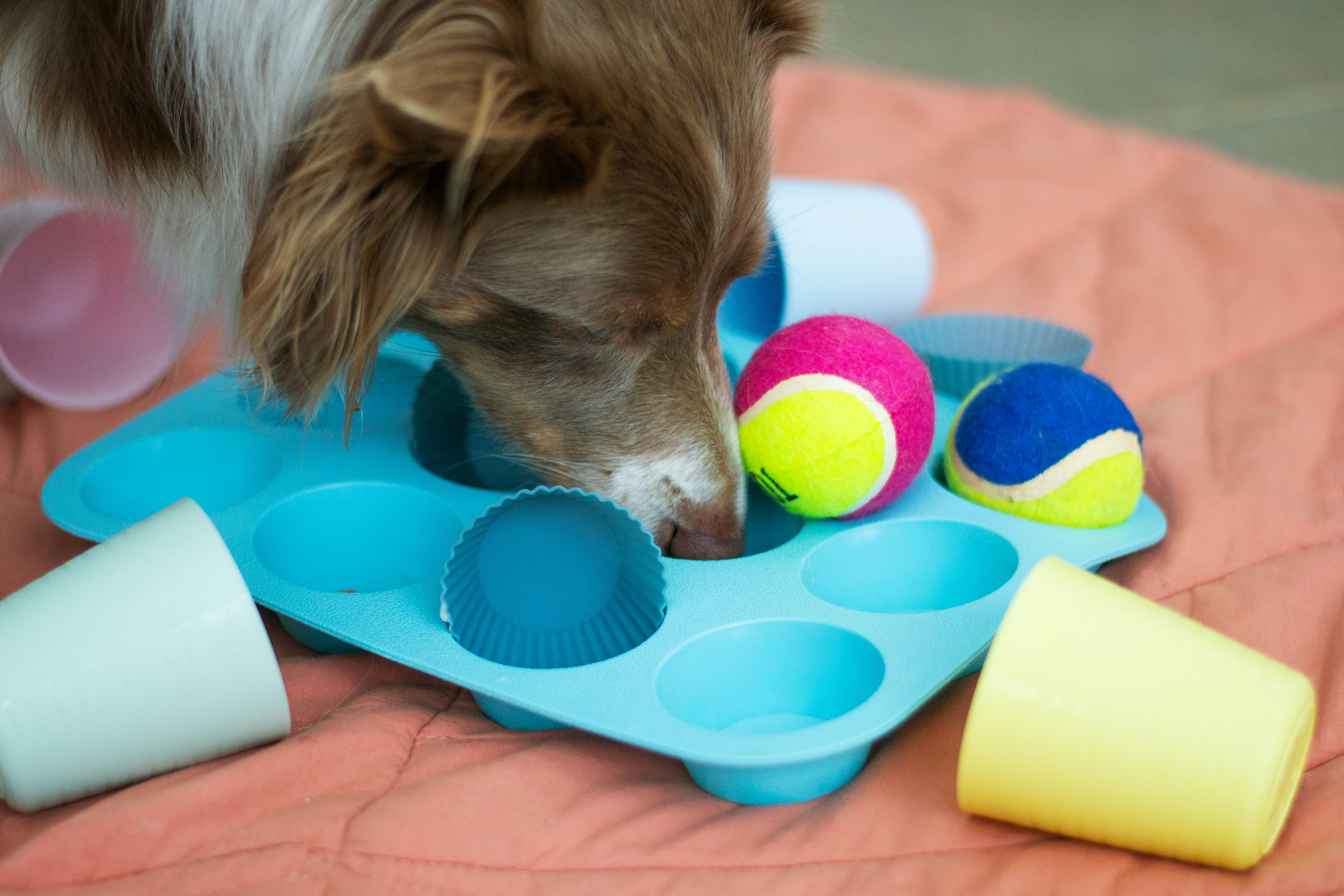
Training with a Prop Box
Create a collection of potential trick props:
- Small platforms, boxes, or stools
- Hoops, poles, or sticks
- Various textured surfaces
- Containers and baskets
- Novel objects that could inspire creative behaviors
Let your dog investigate these items, capturing and shaping interesting interactions that could become formalized tricks.
Behavior Chains
Connect multiple behaviors into impressive sequences:
- Teach each individual behavior to fluency
- Connect two behaviors, rewarding after both are completed
- Add behaviors one at a time to the chain
- Add a single cue that initiates the entire sequence
- Maintain occasional rewards for individual components during practice
Example chain: "Put on a show" → Dog spins, sits, high fives, then plays dead
Free Shaping Sessions
Develop creativity through non-directed training:
- Present an object without giving instructions
- Mark and reward any interaction with the object
- Continue rewarding increasingly specific interactions
- See what unique behaviors emerge
- Add cues to the most interesting behaviors
This approach often reveals behaviors you would never think to train deliberately!
Showcasing Your Dog's Trick Repertoire
Once your dog has mastered several tricks, consider these fun ways to showcase their talents:
Trick Routines
Create a choreographed sequence set to music:
- Choose 5-8 tricks that flow well together
- Select music with an appropriate tempo
- Practice transitions between tricks
- Keep the routine under 2 minutes for maximum impact
- End with a crowd-pleasing finale trick
Trick Titles and Certifications
Several organizations offer trick dog titles:
- AKC Trick Dog (Novice through Elite Performer levels)
- Do More With Your Dog (Novice through Champion levels)
- Trick demonstrations at therapy dog visits
- Online trick challenges and competitions
These provide goals and recognition for your training efforts.
Practical Application
Incorporate tricks into daily life:
- "Say please" (sitting) before meals or treats
- "Go to your spot" while preparing dinner
- "Weave" through legs while drying off after rain
- "High five" as a greeting for visitors
- "Back up" to create space in crowded areas
Trick Training for Special Situations
Adapt your approach for different dogs and circumstances:
For Senior Dogs
Modify to accommodate aging bodies:
- Focus on mentally stimulating tricks with minimal physical demands
- Provide stable surfaces and avoid tricks requiring jumping
- Break training into shorter sessions
- Consider tricks done from a lying down position
- Emphasize nose work and object recognition tricks
For Dogs with Physical Limitations
Adapt tricks to their abilities:
- Consult with your veterinarian about appropriate movements
- Consider seated or stationary versions of popular tricks
- Focus on scent discrimination and cognitive challenges
- Adjust your criteria to match their capabilities
- Celebrate effort and engagement more than physical perfection
For Multiple Dogs
Create a cohesive trick team:
- Train each dog individually before combining
- Teach dogs to wait their turn via station training
- Create complementary routines where each dog has featured moments
- Practice "stay" with distractions extensively
- Consider tricks where dogs interact or perform different parts of a sequence
At AutoDoggy, our AI-highly focused, personalized training plans training plans can analyze your dog's personality, physical capabilities, and current skill level to create a customized trick training progression. We provide step-by-step guidance for teaching tricks that suit your dog's natural tendencies and learning style.
Ready to discover what amazing tricks your dog can learn? Get your personalized trick training plan from AutoDoggy today.