
German Shepherd Training: A Complete Guide for a Working Breed
German Shepherd Training: A Complete Guide for a Working Breed
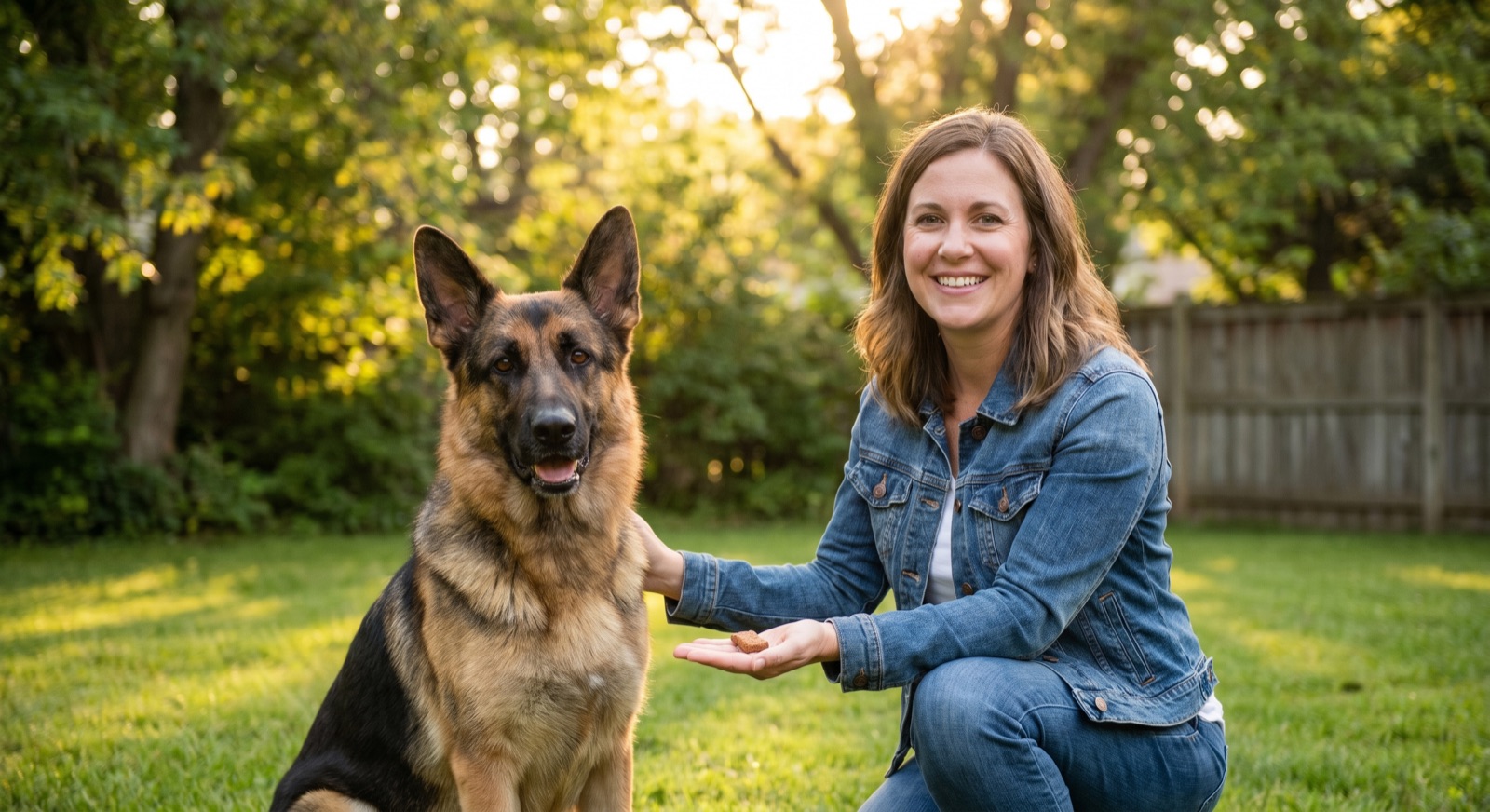
German Shepherds are not "hard to train." They're easy to train — and easy to mistrain. They're working dogs. They were bred to think, to make decisions, and to act with intention. Treat them like a Labrador and you'll get either a frustrated dog or a dog that has decided you're not the leader and is making decisions on your behalf.
Here's how to train a German Shepherd well.
What makes a German Shepherd different
- Working drive. They need a job. Without one, they invent jobs — usually involving herding the kids, alerting on every car, or destroying furniture.
- Strong handler bond. Once they're your dog, they're very your dog. This is a feature and a risk (resource-guarding the family is a thing).
- Sharp environmental awareness. GSDs notice everything. The mail carrier. The neighbor's new car. The squirrel three blocks over. This is genetic, not a training failure.
- Genetic protectiveness. Even pet-line GSDs have natural alerting instincts. The training question is whether they make calm decisions or reactive ones.
- Sensitive but tough. They handle physical stress well, but harsh training erodes their handler-confidence. Force-free methods work better than corrections — even though plenty of old-school trainers will tell you otherwise.
The 5 things to nail first
If you only train five things in your GSD's first year, make them these:
1. Off switch on a mat ("place" / "settle")
A GSD that can switch off on a mat is a GSD that can live in any household. Build duration starting with 2 minutes and working up to 30+ minutes. Do this daily from day one. It's the most underrated GSD skill.
2. Bombproof recall
GSDs at full sprint can travel 35+ mph and disappear in seconds. Recall must be reliable before off-leash freedom. Practice on a long line until the dog is at least 18 months old, in 5+ different environments, and you've never had a failed recall in the past 50 attempts.
3. Look at me / focus
Teach your GSD that turning their attention to you in any environment is the most rewarding choice. This is the skill that prevents reactivity. Reward heavily and often, especially when distractions appear.
4. Loose-leash walking under distraction
A pulling 80-pound GSD is genuinely dangerous to walk. Front-clip harness, "be a tree" stops, and consistent practice. Don't tolerate pulling for 9 months and expect to fix it on month 10.
5. Calm doorbell / threshold behavior
GSDs naturally alert at the door. The goal isn't to suppress alerting — it's to teach them to alert and then go to a place. Bark + "place" + reward. Within 4–6 weeks of consistency, your dog will alert and self-relocate to their mat without being asked.
Reactivity in German Shepherds
Many GSDs develop reactivity to other dogs, strangers, or moving stimuli during adolescence (8–18 months). Some warning signs:
- Pulling and lunging toward triggers on leash.
- Hard staring at dogs across the street.
- Barking at people walking past your home.
This is normal genetic expression — and it doesn't fix itself. The earlier you address it with structured behavior modification (BAT, LAT, look-at-that), the better the outcome.
What does not work:
- Punishing the bark / lunge. You suppress the warning, not the underlying state.
- Forcing closeness ("flooding"). This makes most dogs worse.
- Dog parks. Almost universally bad for reactive GSDs.
What does work:
- Distance + calm exposure. Reward voluntary disengagement from triggers.
- Daily decompression sniff walks (no obedience demands; just be a dog).
- Predictable structure. GSDs find routine calming.
A realistic GSD weekly schedule
For an adolescent (6–18 months) German Shepherd:
- Daily: 3 short training sessions (10 min), 60–90 min of physical exercise, 30+ min of mental enrichment, 30+ min of crate or place rest.
- 3x/week: structured leash walk in a moderately distracting environment.
- Weekly: 1–2 socialization outings (calm patios, hardware stores, friend visits).
- Weekly: 1 deeper enrichment activity — scent work, sniffing-only walk, free-shaping session.
Most "behavior problems" in GSDs are actually unmet needs. A GSD getting one walk a day and zero mental work will become destructive. Same dog with two structured outlets per day is calm.
Health considerations that affect training
GSDs have high rates of:
- Hip and elbow dysplasia.
- Degenerative myelopathy in older dogs.
- Bloat / GDV — feed multiple smaller meals, avoid heavy exercise immediately after eating.
- Allergies that affect mood and focus.
Sudden behavioral change → vet check before you assume it's a training problem.
Why a personalized plan matters
A working-line GSD from a Schutzhund kennel and a pet-line GSD from a backyard breeder are very different dogs, even at the same age. So is a 5-month-old vs. a 14-month-old. So is a GSD that lives with kids vs. one that doesn't.
AutoDoggy generates a German Shepherd plan that takes all of that into account — your dog's lineage type, age, behavior history, household, and your weekly schedule. The included AI trainer answers your questions in context, with knowledge of your plan.