
Housetraining Woes? A Step-by-Step Guide for Puppies and Adult Dogs
Housetraining Woes? A Step-by-Step Guide for Puppies and Adult Dogs
Housetraining challenges rank among the most common frustrations for dog parents. Whether you're dealing with a brand-new puppy or an adult dog with inconsistent habits, finding puddles or unwelcome "presents" in your home can test your patience and strain your relationship with your canine companion.
The good news? With the right approach, virtually any dog can be successfully housetrained. At AutoDoggy, we've analyzed thousands of successful training plans, and we're here to share the science-backed methods that consistently produce reliable results—no matter your dog's age, breed, or previous history.
Understanding Your Dog's Bathroom Needs
Before diving into techniques, it helps to understand the biological realities behind your dog's bathroom behavior:
- Puppies have limited physical control: Young puppies typically can't hold their bladder longer than their age in months plus one hour (e.g., a 3-month-old puppy needs opportunities every 4 hours, even overnight).
- Adult dogs can generally hold it 6-8 hours: But this varies by size, health, and individual differences.
- Dogs naturally avoid soiling their living space: This instinct, which we can leverage in training, is why crate training can be effective.
- Medical issues can impact housetraining: Urinary tract infections, digestive problems, and age-related conditions can all cause otherwise housetrained dogs to have accidents.
The 5 Most Common Housetraining Mistakes
Before outlining what works, let's address what doesn't:
- Punishment after the fact: Scolding a dog for an accident discovered later is ineffective because dogs can't connect your reaction to an action they performed earlier.
- Inconsistent schedules: Dogs thrive on routine, and irregular bathroom opportunities set them up for failure.
- Missing early warning signs: Failing to recognize subtle indicators like sniffing, circling, or restlessness before elimination.
- Insufficient cleaning of accident areas: Dogs are drawn back to spots that smell like previous eliminations.
- Expecting too much too soon: Housetraining is a process that takes time and patience, not an overnight transformation.
Step-by-Step Housetraining: The Foolproof Approach
For Puppies (8 weeks to 6 months)
Step 1: Establish a strict schedule
- Take your puppy out first thing in the morning
- After each meal (typically 15-30 minutes after eating)
- After play sessions and naps
- Last thing before bedtime
- During the night as needed for young puppies
Step 2: Choose a designated bathroom spot
- Select a consistent area for elimination
- Take your puppy there on leash every time
- Use a consistent cue like "go potty" or "do your business"
- Wait patiently (5-10 minutes) for success
Step 3: Reward generously
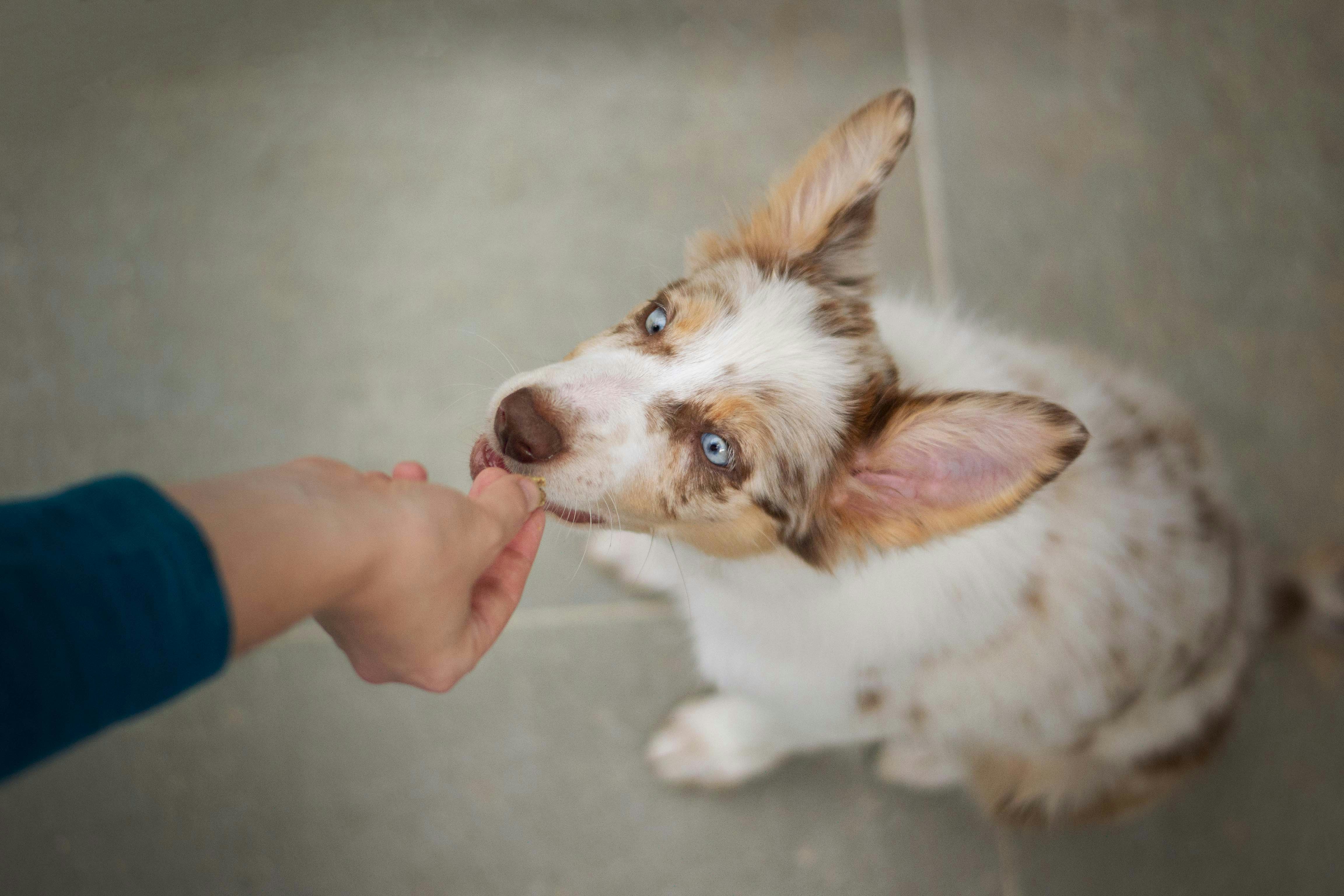
- Immediately praise and treat when your puppy eliminates in the right place
- Make the reward exceptional—this is worth celebrating!
- Keep the party outside to avoid interrupting elimination
- Only reward after elimination is complete, not during
Step 4: Supervise or confine when indoors
- Keep your puppy in your direct sight when inside
- Use baby gates, closed doors, or a puppy-proofed room to limit access
- Consider a properly-sized crate for times when direct supervision isn't possible
- Watch for pre-elimination behaviors (circling, sniffing, sudden focus)
Step 5: Handle accidents properly
- If you catch your puppy in the act, calmly interrupt with a neutral "oops" and quickly take them outside
- Never punish, scold, or rub their nose in accidents
- Clean accidents thoroughly with an enzymatic cleaner specifically designed for pet messes
- Review your supervision and schedule if accidents occur
For Adult Dogs
The approach for adult dogs follows the same core principles with a few adjustments:
Step 1: Start with a clean slate
- Have your vet rule out medical issues
- Deep clean all previous accident areas with enzymatic cleaners
- Consider temporarily blocking access to previous accident locations
Step 2: Implement a structured schedule
- Take your dog out at consistent times throughout the day
- Gradually extend the time between bathroom breaks as reliability improves
- Maintain the schedule on weekends and days off
Step 3: Use positive reinforcement
- Even adult dogs need to know when they've done the right thing
- Praise and occasionally treat outdoor elimination
- Never punishment for indoor accidents
Step 4: Consider a "restart" training approach
- Treat your adult dog like a puppy for a few weeks with more frequent outings
- Gradually increase freedom as reliability improves
- Use tethering (keeping your dog attached to you with a leash indoors) to prevent unsupervised accidents
Troubleshooting Specific Housetraining Challenges
Submissive or Excitement Urination
Some dogs, especially younger ones, may urinate when excited or feeling submissive. This isn't a housetraining issue but a separate behavioral response:
- Keep greetings low-key to reduce excitement
- Avoid looming over or making direct eye contact, which can trigger submissive urination
- Build confidence through positive training experiences
- This behavior often resolves with maturity and confidence building
Marking Behavior
Male dogs (and some females) may urinate small amounts on vertical surfaces to mark territory:
- Address this with neutering/spaying if not already done
- Clean marked areas thoroughly with enzymatic cleaners
- Use belly bands temporarily while retraining
- Prevent access to previously marked areas
- Interrupt and redirect when catching the behavior
Anxiety-Related Elimination
Dogs with separation anxiety or fear may eliminate when stressed:
- Address the underlying anxiety with behavior modification
- Consider consulting a veterinary behaviorist for severe cases
- Create positive associations with previously accident-prone areas
- Use calming aids like pheromone diffusers if recommended by your vet
Special Considerations for Different Situations
Apartment Living
When outdoor access is less convenient:
- Establish a strict schedule with more frequent outings
- Consider using puppy pads as a temporary or emergency solution
- Train a clear "hurry up" cue to encourage efficient elimination
- Walk your dog before leaving them alone for extended periods
Extreme Weather
When outdoor conditions are challenging:
- Create a sheltered outdoor area if possible
- Keep outdoor sessions brief but frequent
- Consider indoor options like dog litter boxes or artificial grass pads for temporary use
- Use positive reinforcement to overcome reluctance to go out in bad weather
Multiple-Dog Households
When housetraining with more than one dog:
- Take dogs out individually during the initial training phase
- Address accidents immediately to prevent "copycat" behavior
- Use separate crates or confinement areas when unsupervised
- Avoid creating competition around elimination-related rewards
A Timeline for Housetraining Success
Setting appropriate expectations is crucial:
- Puppies (8-12 weeks): Expect frequent accidents and nighttime needs
- Puppies (3-4 months): Should show progress but still need close supervision
- Puppies (4-6 months): Developing good habits but may have occasional accidents
- Puppies (6+ months): Should be mostly reliable in familiar environments
- Adult dogs: Typically show significant improvement within 2-4 weeks of consistent training
Remember that small breed dogs often take longer to housetrain than larger breeds, and some individuals may take more time regardless of age or size.
When to Seek Professional Help
Consider additional support if:
- Your dog was previously reliable and suddenly has frequent accidents (veterinary check first)
- You've followed all recommendations consistently for several weeks without improvement
- Your dog eliminates in their crate or sleeping area
- Your dog seems distressed or shows unusual behaviors around elimination
At AutoDoggy, our AI-highly focused, personalized training plans training plans can customize a housetraining protocol specifically for your dog's age, breed, living situation, and previous history. We provide day-by-day guidance and troubleshooting support to address your specific challenges.
Ready to solve your housetraining challenges for good? Get your personalized housetraining plan from AutoDoggy today.