
How Long Does It Take to Train a Dog? A Realistic Timeline by Behavior
How Long Does It Take to Train a Dog? A Realistic Timeline by Behavior
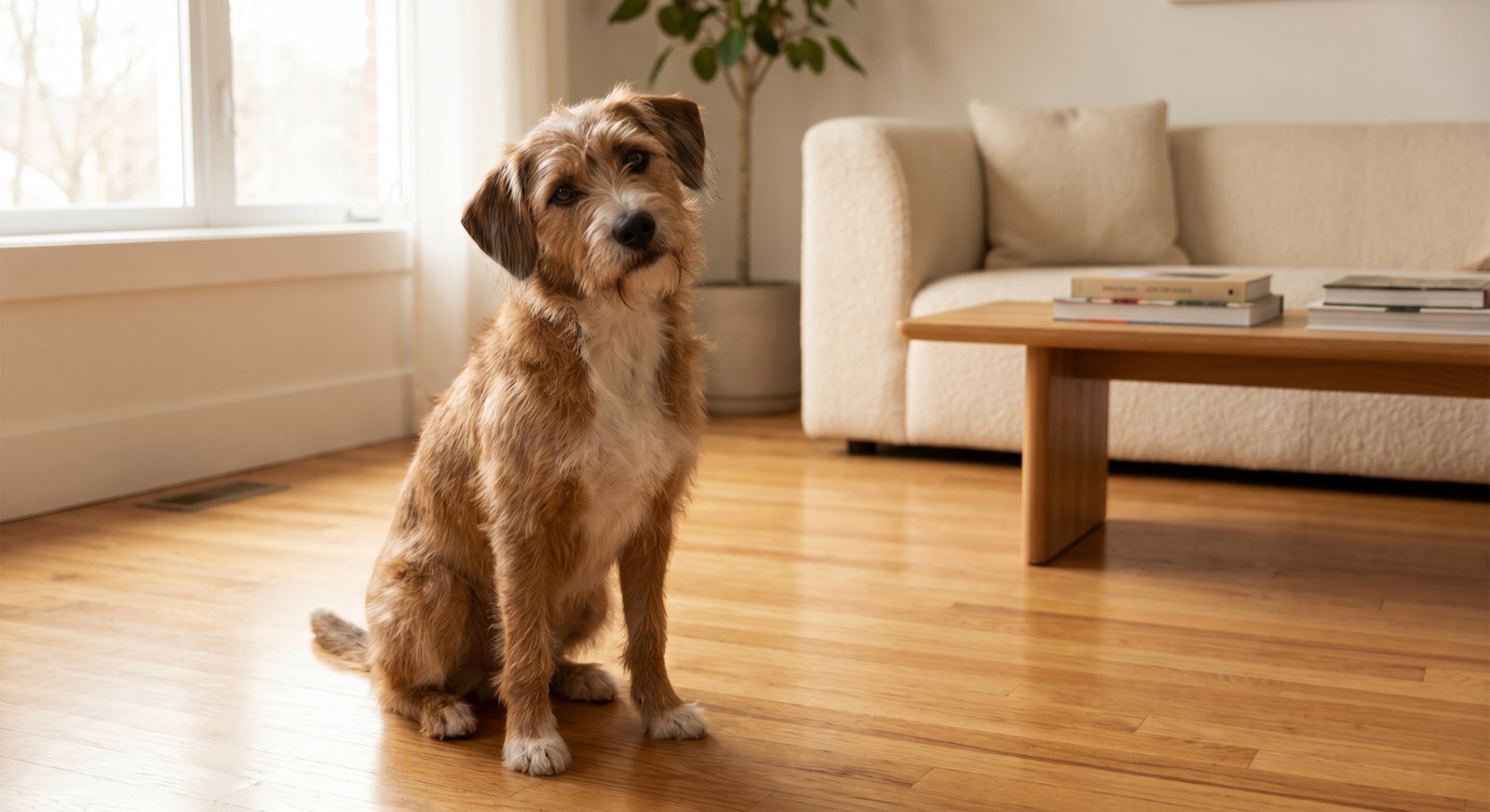
The honest answer to "how long does it take to train a dog?" is: it depends on what you're training, how often you practice, and how consistent you are.
But "it depends" is a useless answer. So here are realistic ranges — the kind we'd give a friend — for the behaviors most people actually care about.
The numbers below assume daily practice (10–15 minute sessions, 2–3 times a day) using positive-reinforcement methods, and a typical adult dog without underlying behavioral issues.
Quick reference: realistic timelines
| Behavior | Time to "yes, kind of" | Time to reliable | Time to proof under distractions | |---|---|---|---| | Sit (in a quiet room) | 1–3 days | 1 week | 2–4 weeks | | Down | 3–7 days | 2 weeks | 4–6 weeks | | Name response | 1–2 weeks | 3–4 weeks | 6–8 weeks | | Leash walking (loose leash) | 1–2 weeks | 4–6 weeks | 2–4 months | | Recall (come) | 2–4 weeks | 3–6 months | 6–12 months | | Crate training | 3–14 days | 3–4 weeks | n/a | | House training (puppy) | 4–8 weeks | 4–6 months | n/a | | Place / settle on mat | 1–2 weeks | 4–6 weeks | 2–3 months | | Drop it / leave it | 1–2 weeks | 4–6 weeks | 2–3 months | | Mild separation anxiety | 2–6 weeks | 2–4 months | n/a | | Reactivity (mild) | 4–8 weeks | 3–6 months | 6–12+ months |
These are typical ranges, not promises. Some dogs are faster, some are slower. The variance comes from the factors below.
What actually affects how fast your dog learns
Five things matter more than breed:
- Practice frequency. Three short sessions a day beats one long Saturday session, every time.
- Consistency between handlers. If you say "down" and your spouse says "lay down," your dog has to learn two cues. Pick one.
- Reward quality and timing. A piece of chicken delivered in 0.5 seconds is worth ten kibble pieces delivered in 3 seconds.
- Distraction management. Asking for "sit" at a busy intersection is not the same task as asking for "sit" in your kitchen. Many people overestimate "trained" because they only practice in easy environments.
- Underlying state. A stressed, overtired, or under-exercised dog cannot learn. Period.
"Why is my dog regressing?"
Not regressing. Generalizing.
When a dog learns "sit" in your kitchen, they have learned: the cue 'sit', delivered in this room, by this person, with this body language, at this time of day. That's the behavior they actually know.
When you ask for "sit" at the vet, you're asking for a different behavior — one they haven't learned yet. So they don't do it. That's not regression; that's a missing training step.
Plan to train every behavior in:
- 3+ rooms of your home
- Your front yard / driveway
- A quiet sidewalk
- A medium-distraction area (calm park, brewery patio)
- A high-distraction area (busy trailhead, downtown)
This is called "proofing" or "generalization," and it's where most casual training stops short.
Behavioral issues take longer than obedience
A dog can learn "sit" in three days. A dog with separation anxiety takes weeks-to-months to feel safe alone — and the timeline depends almost entirely on how patient you are at staying below threshold.
For behavior-modification work (reactivity, fear, separation anxiety, resource guarding), the rule is: moving slower is faster. People who try to push their dog through harder thresholds because they're impatient almost always end up with more setbacks and a longer total timeline.
Are some breeds faster to train?
Yes — but probably not in the direction you expect.
- Faster to learn cues: Border Collies, Poodles, Golden Retrievers, German Shepherds, Australian Shepherds. They also get bored faster.
- Slower to learn cues, easier to live with: Bulldog breeds, many hounds, Basenjis. They aren't "dumb" — they're independent thinkers.
- Looks easy, secretly hard: Huskies and other primitive breeds. They learn what's in it for them and ignore the rest.
Faster-to-learn isn't the same as easier-to-live-with. A Border Collie that learned "sit" in 30 seconds still needs 2 hours of mental enrichment a day or they'll redecorate your house.
The real question is the daily plan
If you train a behavior for 5 minutes once a week, even "easy" behaviors will take months. If you train for 5 minutes three times a day, even "hard" behaviors get fast.
This is exactly the gap AutoDoggy was built for — your plan tells you exactly what to do, every day, for your specific dog. Not a generic 30-day challenge. A real plan you can follow.