
Mental Enrichment for Dogs: Building a Smarter, Happier Companion
Mental Enrichment for Dogs: Building a Smarter, Happier Companion
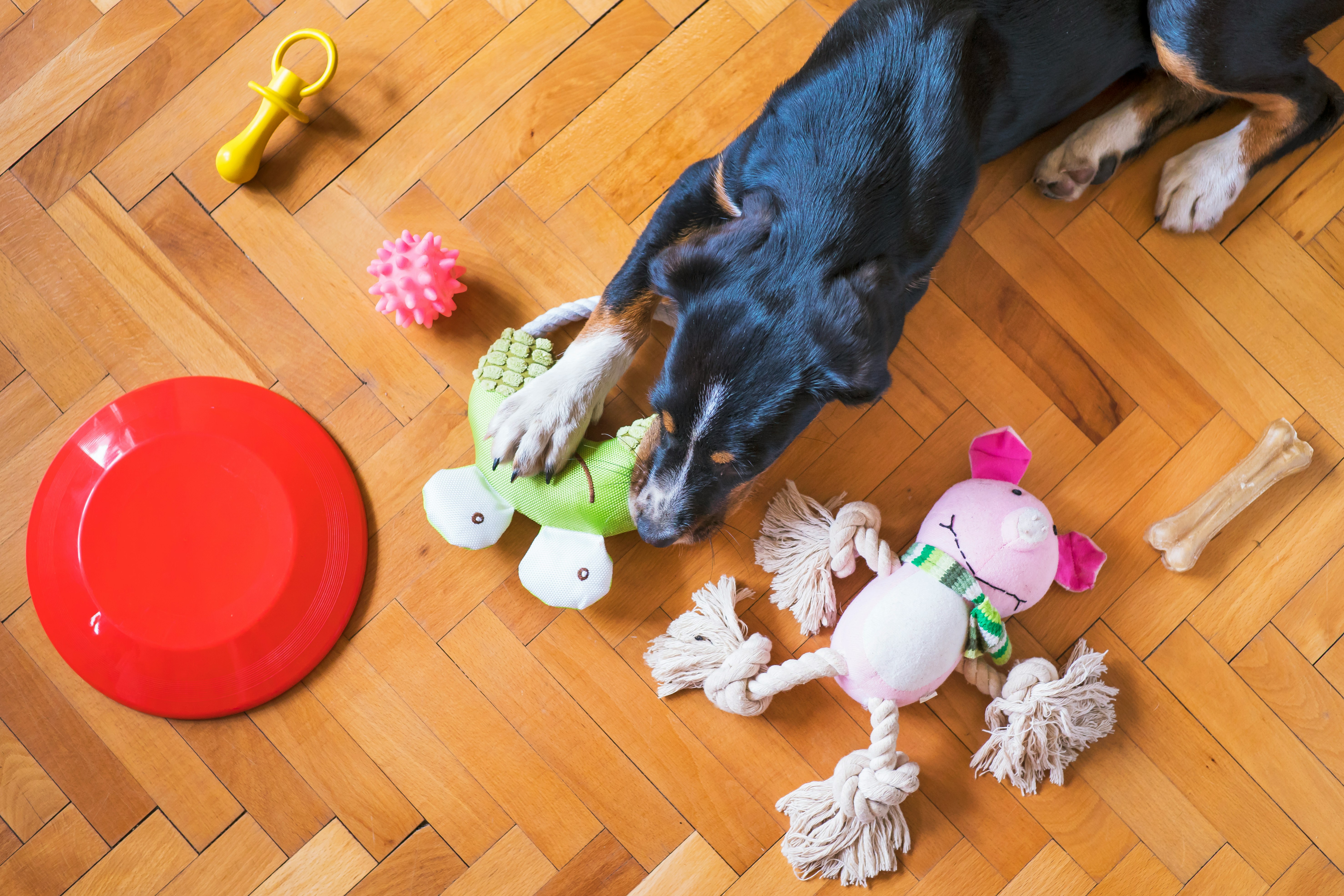
"A tired dog is a good dog" is a common phrase in dog training circles. But what many dog parents don't realize is that physical exercise alone often isn't enough. Dogs need mental stimulation just as much as they need physical activity—especially intelligent, high-energy breeds bred for working purposes.
At AutoDoggy, we've found that many behavioral issues stem not just from a lack of exercise, but from insufficient mental engagement. Boredom can lead to destructive behaviors, excessive barking, and even symptoms that mimic anxiety. The good news? Adding mental enrichment to your dog's routine is simple, affordable, and incredibly rewarding for both of you.
Why Mental Enrichment Matters
Dogs evolved as problem-solvers. Whether hunting, herding, or performing specialized tasks, their brains are wired for mental challenges. In our modern households, we often provide ample food and physical care while inadvertently neglecting this crucial aspect of their wellbeing.
Mental enrichment offers multiple benefits:
- Prevents boredom-related behaviors like inappropriate chewing, digging, and nuisance barking
- Builds confidence by allowing dogs to solve problems successfully
- Strengthens your bond through positive, engaging interactions
- Tires dogs out more effectively than physical exercise alone
- Keeps aging dogs mentally sharp, potentially slowing cognitive decline
- Reduces stress and anxiety by providing appropriate outlets for natural behaviors
Even just 15-20 minutes of targeted mental stimulation can have the same tiring effect as an hour-long walk for many dogs!
Signs Your Dog Needs More Mental Enrichment
Your dog might be telling you they need more mental challenges if they:
- Get into mischief when left alone, even after physical exercise
- Seem restless or have trouble settling down
- Create their own "jobs" like excessive alert barking or herding household members
- Become fixated on repetitive behaviors like tail-chasing or shadow-chasing
- Appear bored with their regular toys and routines
- Show destructive behaviors like inappropriate chewing or digging
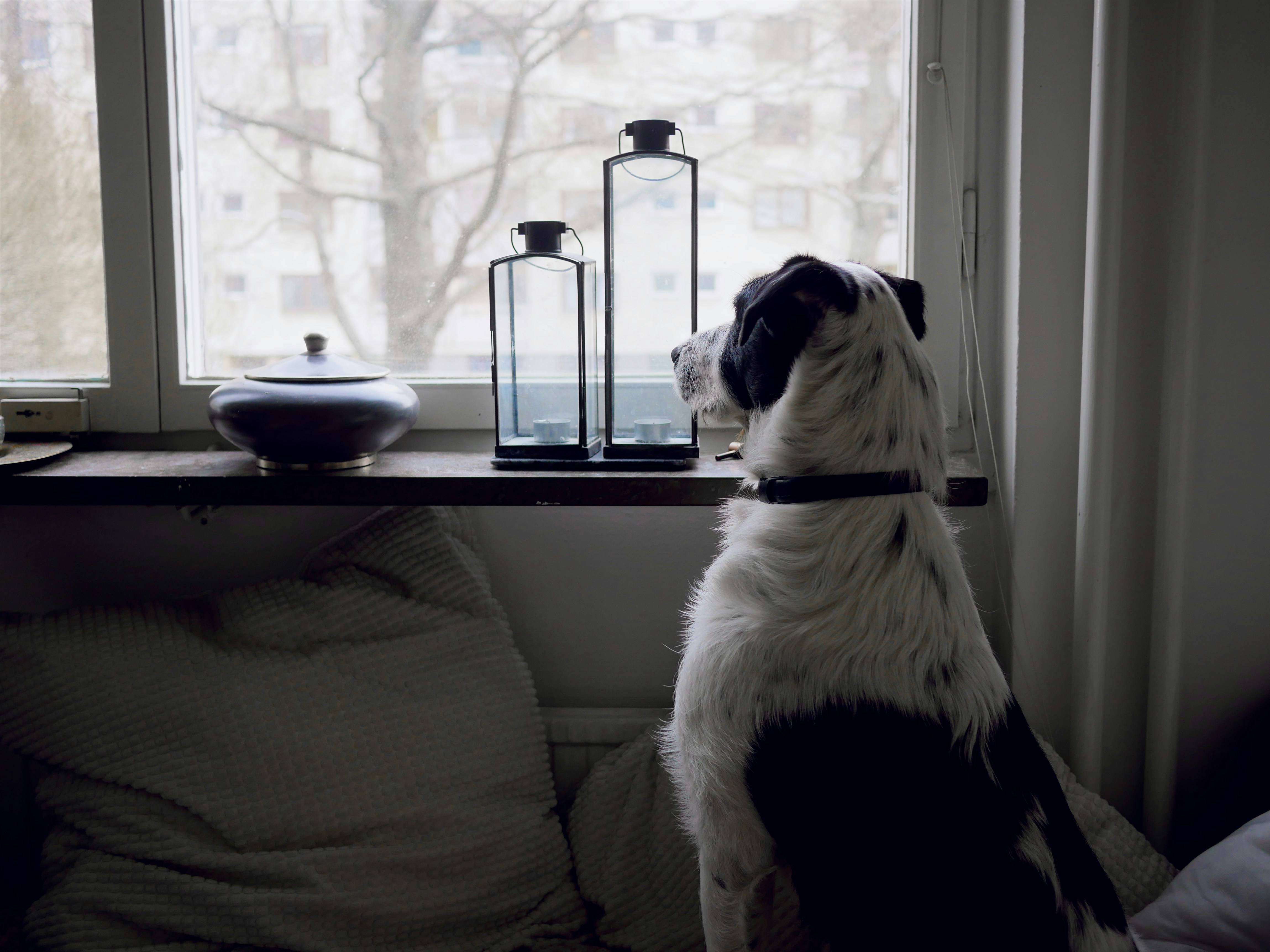
Mental Enrichment By Breed Type
Different breeds have different mental stimulation needs based on their original purpose:
Working Breeds (German Shepherds, Border Collies, Huskies)
- Need the most substantial mental challenges
- Excel at complex problem-solving and learning new skills
- Benefit from activities that mimic "work" or have clear objectives
Sporting Breeds (Retrievers, Pointers, Spaniels)
- Thrive on scent-based activities and retrieving games
- Enjoy water-based challenges when available
- Benefit from activities that engage their natural hunting instincts
Terriers (Jack Russells, Fox Terriers, Cairn Terriers)
- Need outlets for their natural digging and hunting instincts
- Excel at fast-paced, engaging games
- Enjoy challenges that require tenacity and determination
Toy Breeds (Pomeranians, Shih Tzus, Chihuahuas)
- Can be surprisingly intelligent and need appropriate challenges
- Enjoy games scaled to their size and physical abilities
- Benefit from activities that build confidence
Brachycephalic Breeds (Bulldogs, Pugs, Boston Terriers)
- Need mental activities that don't require intense physical exertion
- Enjoy food puzzles and scent games
- Benefit from shorter, more frequent enrichment sessions
10 Effective Mental Enrichment Activities to Try Today
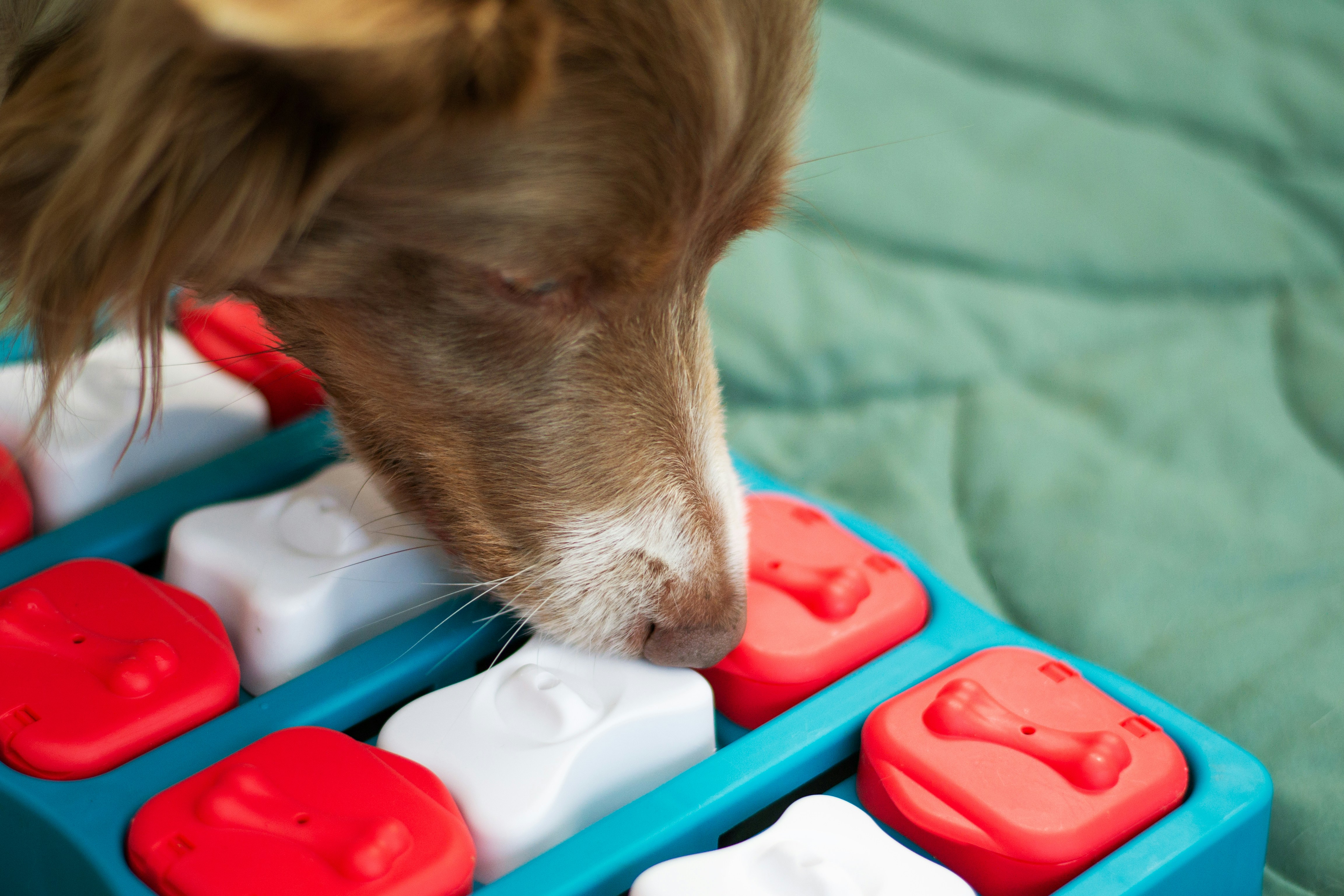
1. Food Puzzles and Slow Feeders
Transform mealtime into mental workout time by making your dog work for their food:
- Puzzle toys with sliding or movable parts that reveal hidden treats
- Snuffle mats where dogs nose through fabric strips to find kibble
- Lick mats spread with dog-safe soft foods that provide engaging licking activity
- Treat-dispensing balls that release kibble as they're rolled around
Pro tip: Start with easier puzzles and gradually increase difficulty as your dog builds skill and confidence.
2. Scent Work Games
Dogs experience the world primarily through their noses, making scent games incredibly satisfying:
- Find it: Hide treats or toys around your home and encourage your dog to find them
- Shell game: Place a treat under one of three cups, shuffle them, and let your dog indicate which cup hides the prize
- Scent trails: Create a trail of treats leading to a special reward
- Name recognition: Teach your dog to find specific toys by name
Pro tip: For added challenge, place treats inside cardboard boxes, under towels, or in other concealed locations.
3. Training New Tricks and Skills
Learning is some of the best mental exercise available:
- Dedicate 5-10 minutes daily to teaching something new
- Break complex behaviors into small, achievable steps
- Use positive reinforcement and keep sessions upbeat
- Once your dog masters basics, try more complex skills like retrieving specific items
Pro tip: End each session with something easy your dog does well to finish on a positive note.
4. Interactive Toys
Toys that respond to your dog's actions provide engagement even when you're busy:
- Wobble toys that rock back and forth when pushed
- Electronic toys that move unpredictably
- Flirt poles (supervised only) that mimic prey movement
- Tug toys for interactive play between human and dog
Pro tip: Rotate toys regularly to maintain novelty and interest.
5. DIY Enrichment Projects
Create engaging activities with items you already have at home:
- Muffin tin game: Place treats in some cups of a muffin tin and cover all cups with tennis balls
- Towel roll: Roll treats in a towel for your dog to unravel
- Cardboard puzzles: Place treats in a cardboard box with crumpled paper
- Bottle games: Place kibble in an empty plastic bottle (remove cap and plastic ring) for your dog to roll and manipulate
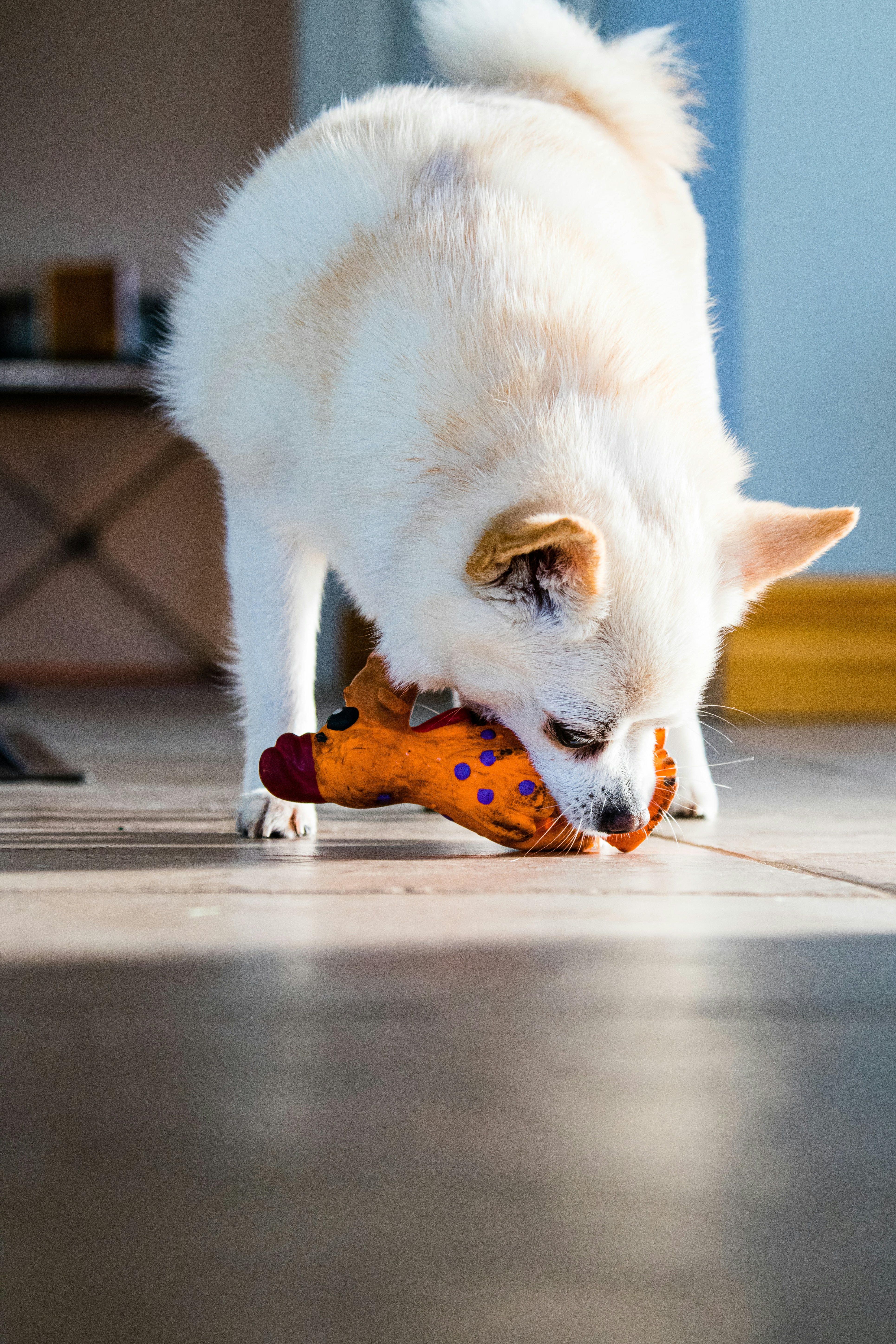
6. Structured Play Sessions
Directed play provides mental stimulation along with physical exercise:
- Fetch with rules (wait for release, bring to hand, etc.)
- Hide and seek (have your dog find family members)
- "Red light, green light" style games where your dog must respond to your signals
- Name toy games where dog must retrieve the specifically named toy
Pro tip: Incorporate training elements into play to reinforce obedience while having fun.
7. Environmental Enrichment
Simply changing your dog's environment provides mental stimulation:
- New walking routes with different sights, sounds, and smells
- Novel surfaces to walk on (sand, leaves, shallow water)
- Obstacle courses using household items
- Safe exploring in dog-friendly stores or new environments
Pro tip: Allow plenty of sniffing time—this is how dogs "read" their world and process information.
8. Social Enrichment
Appropriate social interaction stimulates your dog's mind:
- Structured playdates with compatible dogs
- New people with different appearances, voices, and interaction styles
- Observation time in controlled environments (watching street activity from a safe distance)
- Training club activities that combine learning with socialization
Pro tip: Always ensure social interactions are positive and not overwhelming for your dog.
9. Chewing Opportunities
Chewing is mentally satisfying and stress-relieving for dogs:
- Long-lasting natural chews appropriate for your dog's size
- Frozen stuffed Kongs or similar toys
- Lick mats with spread dog-safe foods
- Puzzle toys that dispense treats when chewed
Pro tip: Supervise chewing and select items appropriate for your dog's chewing style and power.
10. Calm Mental Activities
Not all mental enrichment needs to be high-energy:
- Settle training where you reward calm behavior
- Gentle massage sessions that your dog enjoys
- "Find the calm" games where being still earns rewards
- Scent work can also be done in a calm, focused way
Pro tip: Mental enrichment before alone time can help your dog settle when you leave.
Creating a Mental Enrichment Schedule
The key to success is consistency and variety. Consider creating a simple weekly schedule:
- Monday: Food puzzle day
- Tuesday: New trick training
- Wednesday: Scent games
- Thursday: Obstacle course
- Friday: Interactive toy time
- Weekend: Special outings or extended play sessions
Even just 10-15 minutes daily of focused enrichment activity can make a significant difference in your dog's behavior and wellbeing.
Tailoring Activities to Your Dog's Personality
Every dog is unique. Pay attention to what your particular dog finds engaging:
- Food-motivated dogs excel with treat-based puzzles
- Play-driven dogs thrive with interactive toys and games
- Shy dogs may prefer solo puzzles over interactive games
- Independent thinkers often enjoy complex problems
- Socially motivated dogs work hard for your engagement and praise
The perfect enrichment activity is one that your dog finds intrinsically rewarding—where the activity itself becomes the reward.
When Enrichment Becomes Training
Mental enrichment and training often overlap. Many enrichment activities can be leveraged to reinforce good manners:
- Use food puzzles to reward calm behavior
- Incorporate commands into games ("sit" before throwing a ball)
- Practice impulse control during exciting activities
- Reward checking in with you during exploration
This creates a virtuous cycle where fun activities strengthen your dog's overall training and responsiveness.
Common Questions About Mental Enrichment
Q: My dog loses interest in puzzles quickly. What should I do?
A: Start with easier puzzles where success is guaranteed, and gradually increase difficulty. Use higher-value treats for challenging games, and demonstrate how the puzzle works if needed.
Q: I don't have much time. Are quick enrichment activities effective?
A: Absolutely! Even feeding meals in a puzzle toy instead of a bowl takes no extra time but provides significant mental stimulation.
Q: My senior dog seems to have lost interest in toys. How can I provide enrichment?
A: Focus on gentle scent games, new walking routes with lots of sniffing time, and simple food puzzles. Senior dogs often appreciate novelty through new environments rather than energetic play.
Q: Can mental enrichment replace physical exercise?
A: They complement each other. While mental enrichment can reduce the need for extreme physical exercise, dogs still need appropriate physical activity for overall health.
At AutoDoggy, our AI-highly focused, personalized training plans training program can help you identify the perfect mental enrichment activities for your specific dog, based on their breed, age, personality, and your lifestyle. We create customized plans that integrate physical exercise, mental stimulation, and training for a comprehensive approach to your dog's wellbeing.
Ready to transform your dog's routine with enriching mental activities? Get your personalized enrichment plan from AutoDoggy today.