
Puppy Training Schedule by Age: A Week-by-Week Guide From 8 Weeks to 1 Year
Puppy Training Schedule by Age: A Week-by-Week Guide From 8 Weeks to 1 Year
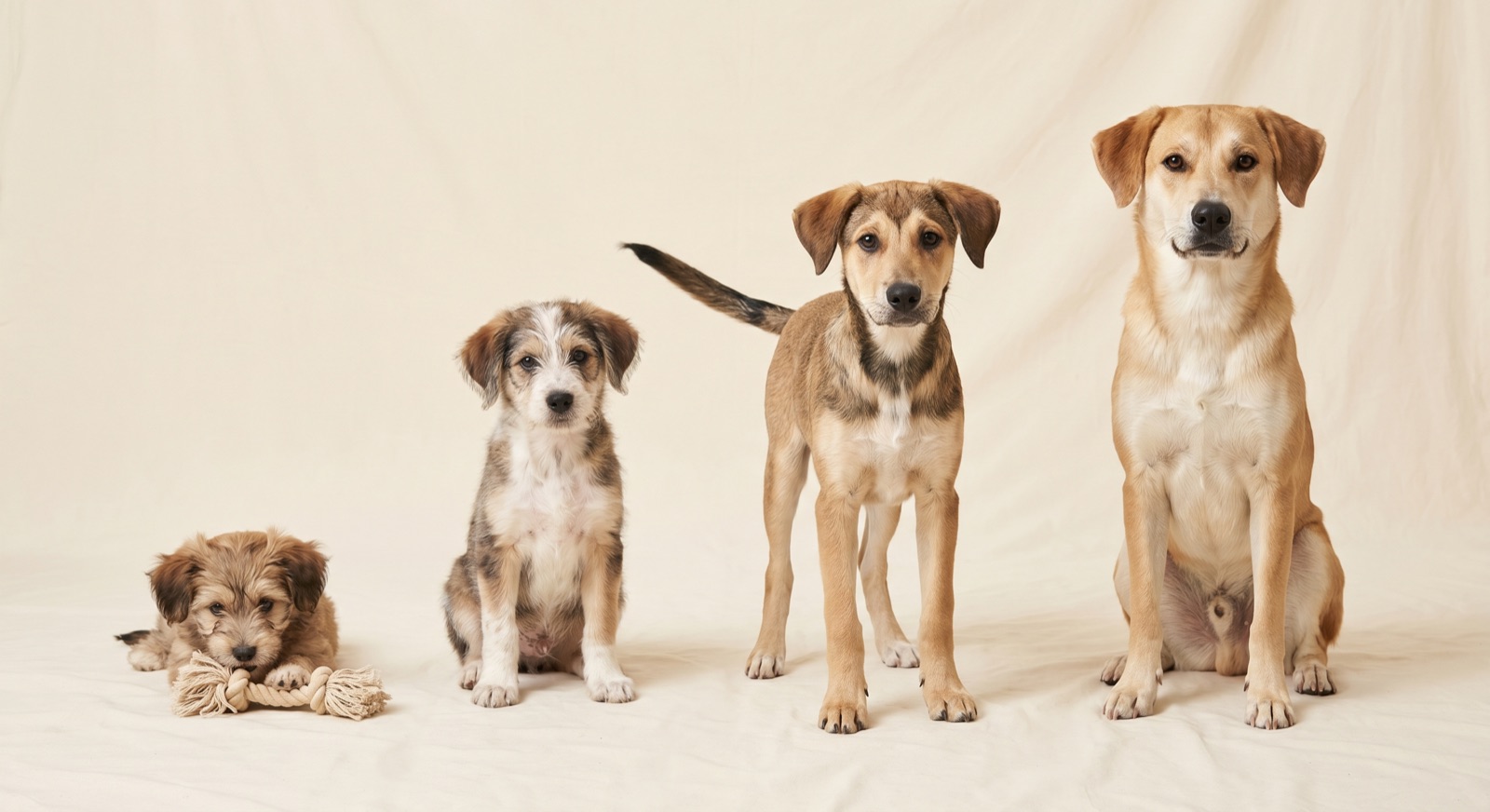
Every puppy is different, but the order in which you train things matters more than people realize. Try to teach a 9-week-old puppy reliable off-leash recall and you'll fail. Wait until 8 months to start crate training and you'll have a much harder time than if you'd started at 9 weeks.
This guide gives you the realistic puppy training schedule by age — what to focus on, what to ignore, and what your daily routine should actually look like.
The 4 phases of puppy training
Puppy training isn't a single curriculum — it's four overlapping phases:
- 8–12 weeks: Foundation. Bonding, name, crate, potty, basic handling, gentle socialization.
- 3–5 months: Civility. Sit, down, name response, beginning loose leash, manners, more socialization.
- 5–8 months: Adolescence prep. Recall, place/settle, impulse control, leash skills under distraction.
- 8–12 months: Generalization. Proofing everything in real-world environments. Adolescent regression is normal.
Trying to skip phases — or compressing them — is the #1 reason adult dogs end up with avoidable behavior issues.
8–10 weeks: Land softly
Focus: bonding, name recognition, potty foundation, crate as a safe place, gentle handling. Almost no formal "obedience" yet.
A realistic daily schedule:
- 7 AM: Outside to potty within 60 seconds of waking.
- 7:15 AM: Breakfast in a snuffle mat or food puzzle.
- 8 AM: 5-minute name game ("Puppy!" → puppy looks → treat).
- 8:30 AM–10 AM: Nap in crate.
- 10 AM: Potty + 10 minutes of supervised play and gentle handling (paws, ears, mouth).
- ... rotate sleep, potty, brief socialization until evening.
- 9 PM: Last potty break, lights out.
Puppies this age sleep 18–20 hours a day. If yours is acting wild, it's almost always overtired.
10–14 weeks: The socialization window
This is the most important window of your puppy's life. Their socialization window closes around 14–16 weeks. Whatever they meet calmly during this period — strangers, kids, other dogs, surfaces, sounds, vehicles — they will likely tolerate as adults.
Focus: 100 new positive exposures by 16 weeks. Vet visits (just for treats), car rides, vacuum, doorbells, hats, beards, kids of varying ages, calm dogs, gentle handling at the groomer, surfaces (grass, tile, metal grates, sand).
Cautions:
- Avoid dog parks and unknown dogs — your puppy isn't fully vaccinated yet.
- Carry your puppy through busy streets if vaccinations aren't complete; experience matters more than physical contact.
Add training: 2-minute sessions, 3x/day. Sit, hand-target ("touch"), and crate name-game.
14–18 weeks: Manners begin
Now your puppy can start learning manners that they'll keep for life.
Focus:
- Loose-leash walking foundation (the "be a tree" technique works at this age).
- Sit, down, drop-it, leave-it.
- "Place" or "settle" on a mat — short durations.
- Continued socialization but more structured.
Daily structure:
- 3 short training sessions (5 minutes each).
- 2 structured walks (15–20 minutes, mostly sniffing).
- 2 structured play sessions with you.
- Lots of nap time still (16 hours/day).
4–6 months: Recall and impulse control
The teenager phase is coming. Bank reliable behaviors before it hits.
Focus:
- Recall as a daily game — not a command. Reward huge for any voluntary check-in.
- Impulse-control games: "It's Yer Choice", wait-at-doors, food-bowl waits.
- Beginning duration on stays.
- Continuing leash skills with a gradual increase in distractions.
Critical: do not use your recall cue ("Come!") for things your puppy hates (bath, crate at end of fun, nail trim). You will poison the cue. Use a different word for those.
6–9 months: Adolescence — and yes, it's hard
Around 6 months, many puppies seem to "forget" everything. They don't. Their brain is being remodeled.
What to expect:
- Selective hearing, especially outdoors.
- Resurgence of pulling, jumping, mouthing.
- New fear periods (be patient with novel scary things).
- Reactivity may emerge — particularly in herding and guarding breeds.
What to do:
- Manage more, train more carefully, and don't escalate corrections.
- Use a long line (15–30 ft) for off-leash work — full freedom is not appropriate yet.
- Continue rewarding heavily for behaviors you previously thought were "learned." They aren't yet.
- Consider 1–2 group classes if you haven't yet — controlled distractions matter.
9–12 months: Generalization
Focus: practicing every behavior in every environment your dog will encounter as an adult.
If your dog has reliable sit at home, that doesn't mean they have sit at the vet, the brewery patio, or the trailhead. Generalization is its own training step. Plan for it.
By the end of month 12 (longer for large/giant breeds — they mature mentally up to age 2), most dogs have a strong foundation that will carry them through adulthood.
What to skip (or de-prioritize)
- Tricks before manners. Roll over is fun. Settle on a mat is life-changing.
- High-intensity exercise. Forced jogging, biking, or repetitive ball before growth plates close (12–18 months) raises long-term joint risk.
- Group dog parks under 6 months. Risk-reward is bad. Use playdates with vetted dogs.
- Aversive tools. Prong, choke, and shock collars are not appropriate for puppies (and arguably not appropriate, period).
A note on breed differences
A Labrador puppy, a Border Collie puppy, and a Cane Corso puppy need very different schedules. Energy needs, training ceiling, socialization sensitivity, and adolescent intensity all differ.
This is exactly why we built AutoDoggy — your training plan is generated specifically for your puppy's breed and individual profile, not a generic curriculum.