
Reactive Dogs: Understanding and Transforming Challenging Behaviors
Reactive Dogs: Understanding and Transforming Challenging Behaviors
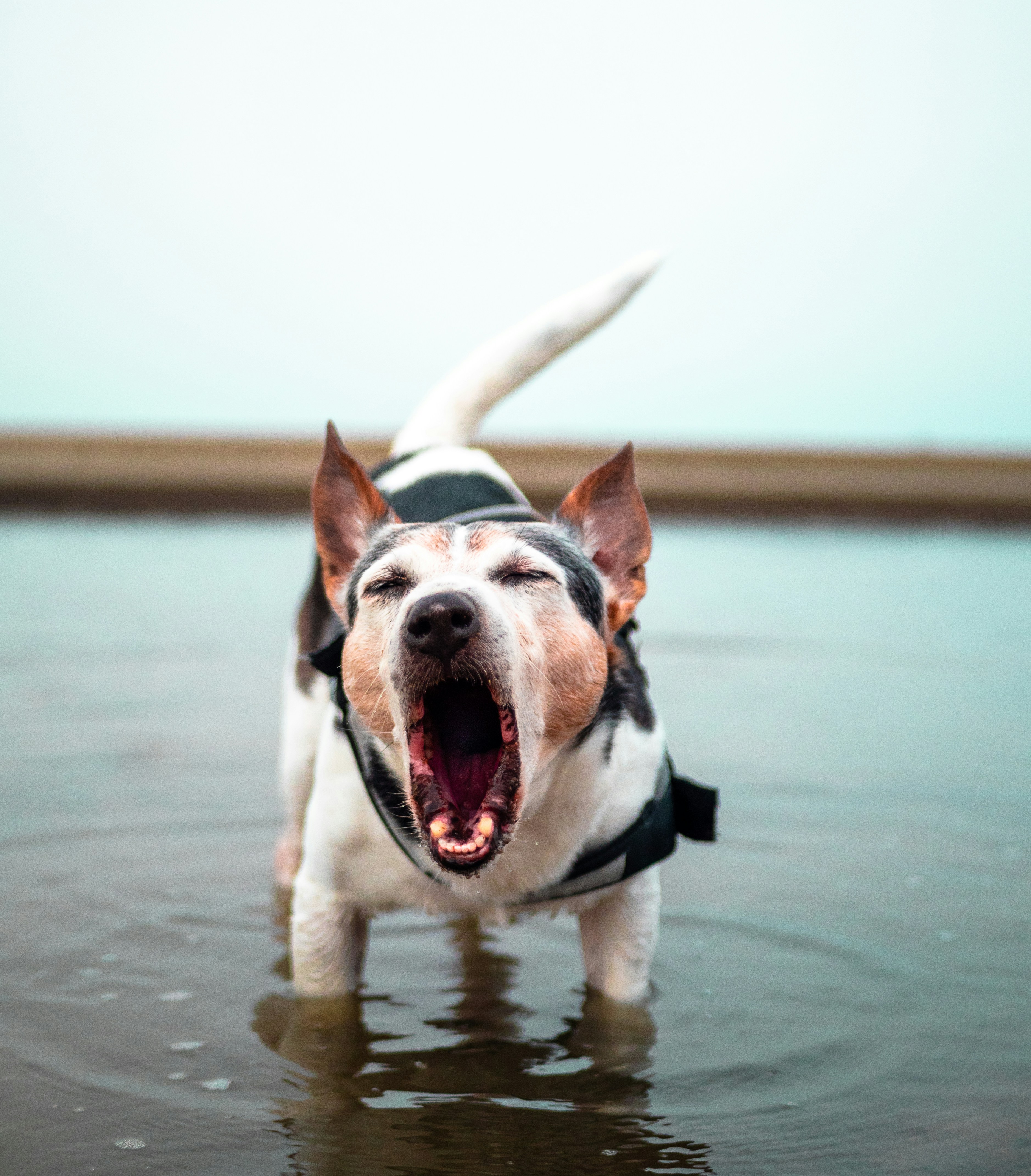
If walks with your dog have become stressful ordeals filled with lunging, barking, or growling at other dogs, people, or moving objects, you're likely dealing with reactivity. Reactive behavior in dogs is one of the most misunderstood and frustrating challenges dog owners face, often leading to isolation and diminished quality of life for both dogs and their humans.
Reactivity isn't just embarrassing or inconvenient—it's a sign that your dog is struggling with emotional regulation in certain situations. The good news is that most reactive dogs can make significant improvements with the right approach, consistency, and understanding of what's driving the behavior.
At AutoDoggy, we've analyzed thousands of cases of reactive dogs and distilled the most effective, science-backed approaches to help transform these challenging behaviors into calmer, more confident responses.
What Exactly Is Dog Reactivity?
Reactivity is an exaggerated response to certain stimuli—commonly other dogs, strangers, vehicles, or specific environmental triggers. It's characterized by:
Common Signs of Reactivity
- Excessive barking, lunging, or growling when exposed to triggers
- Hypervigilance - constant scanning of the environment
- Inability to focus or calm down in the presence of triggers
- Stiff body posture with raised hackles or tense muscles
- Fixed staring at the trigger
- Reactive displays that seem disproportionate to the actual threat
- Difficulty recovering once triggered
It's crucial to understand that reactive behavior isn't the same as aggression, though it can sometimes escalate to aggression if chronically mismanaged. Most reactive dogs are actually experiencing fear, frustration, or overstimulation rather than aggression.
The Three Types of Reactive Dogs
Understanding the specific type of reactivity your dog displays is essential for effective intervention:
1. Fear-Based Reactivity
What it looks like:
- Barking and lunging while trying to increase distance from the trigger
- Hackles raised, body posture might alternate between forward and back
- May include growling, snarling, or snapping if the trigger gets too close
- Often worse when the dog feels cornered or restrained
Common triggers:
- Unfamiliar people, especially those with certain appearances or behaviors
- Other dogs, particularly those with intimidating postures
- Loud noises or unpredictable movements
- Specific environments associated with past negative experiences
2. Frustration-Based Reactivity (Sometimes Called "Leash Reactivity")
What it looks like:
- Pulling, whining, barking, or jumping when seeing potential playmates
- High-pitched vocalizations
- Bouncy body language mixed with intensity
- May look similar to aggression but stems from wanting to interact
Common triggers:
- Other dogs when the dog actually wants to greet/play
- People the dog wants to meet
- Exciting environments the dog wants to explore
- Any situation where a barrier (leash, fence, window) prevents desired interaction
3. Territorial/Protective Reactivity
What it looks like:
- Displays primarily occur around the home or near family members
- Confidence in body posture rather than fear
- Alert barking that intensifies as triggers get closer
- May include patrolling behaviors or "resource guarding" of spaces
Common triggers:
- Strangers approaching the home
- Unfamiliar people or animals near family members
- Delivery personnel or visitors
- Movement outside property boundaries
Many dogs exhibit a combination of these types of reactivity, and the underlying emotions can be complex. For example, a dog might initially develop fear-based reactivity that then becomes habitual or even rewarding if the reactive display successfully removes the perceived threat.
Why Dogs Become Reactive: Root Causes
Reactivity rarely develops randomly. Understanding the potential causes can help tailor your approach:
Genetic Predisposition
Some breeds have been selectively bred for vigilance, protectiveness, or sensitivity to environmental changes. While this doesn't determine a dog's destiny, it can influence their threshold for reactivity.
Lack of Early Socialization
Dogs who didn't experience positive, diverse exposure to various people, animals, and environments during their critical socialization period (roughly 3-14 weeks) may be more likely to develop reactivity later in life.
Traumatic Experiences
A single frightening encounter or repeated negative experiences can trigger reactive responses. For example, being attacked by another dog or having uncomfortable forced interactions with strangers.
Reinforced Behavior
If reactive displays successfully make the "scary thing" go away (people or dogs move away when your dog barks), the behavior becomes reinforced through negative reinforcement.
Medical Issues
Pain, thyroid disorders, neurological issues, or vision/hearing impairments can all contribute to reactive behavior by lowering a dog's threshold for stress.
Inconsistent Handling
Mixed signals from owners, punishment for warning signals, or unpredictable responses to triggers can increase a dog's anxiety and reactivity.
The 7-Step Reactive Dog Rehabilitation Protocol
Based on behavioral science and thousands of successful cases, this systematic approach can transform reactive behavior:
Step 1: Rule Out Medical Causes
Before assuming reactivity is purely behavioral:
Action plan:
- Schedule a veterinary examination with complete bloodwork
- Consider thyroid testing, as hypothyroidism can cause behavior changes
- Evaluate for pain, especially in joints, back, or neck
- Discuss whether a veterinary behaviorist consultation might be beneficial
This important first step ensures you're not trying to train away symptoms of a medical problem.
Step 2: Identify Triggers and Thresholds Precisely
Effective management and training require detailed understanding of:
Action plan:
- Keep a reactivity journal documenting all incidents
- Note specifics: distances, characteristics of triggers, time of day, your dog's state
- Identify early warning signs before full reactivity occurs
- Determine the "threshold distance" where your dog notices triggers but can still respond to you
- Map patterns to identify predictable reactions versus anomalies
This data will form the foundation of your customized training plan.
Step 3: Implement Emergency Management Protocols
While working on long-term solutions, you need immediate strategies to prevent rehearsal of reactive behavior:
Action plan:
- Learn to scan environments and identify triggers before your dog does
- Master the "emergency U-turn" to smoothly exit challenging situations
- Create distance from triggers before your dog goes over threshold
- Use barriers (parked cars, trees) to block visual triggers during walks
- Consider walking in quieter areas or during off-peak times temporarily
- Use appropriate equipment (front-clip harness, head halter) for better control without punishment
Remember: Every time your dog practices reactivity, the neural pathways strengthen. Every successful avoidance of reactivity builds new, calmer response patterns.
Step 4: Build a Strong Foundation of Alternative Behaviors
Before tackling triggers directly, develop reliable behaviors your dog can perform instead of reacting:
Action plan:
- Train a rock-solid attention cue ("watch me" or name response)
- Develop an automatic "check-in" where your dog looks to you in new environments
- Master a "go to mat" or "go behind" cue for creating distance from triggers
- Practice emergency recall for quickly moving away from potential issues
- Teach "find it" for scattering treats to distract and redirect
These skills become your toolkit for redirecting your dog when triggers appear at manageable distances.
Step 5: Begin Counterconditioning and Desensitization
Now you're ready to systematically change your dog's emotional response to triggers:
Action plan:
- Start with triggers at distances well beyond your dog's reactive threshold
- Pair the mere sight of triggers with high-value treats, creating a positive association
- Progress in tiny increments, decreasing distance only when your dog shows neutral or positive responses
- Maintain focus on changing emotions, not just behaviors
- Keep sessions short (5-15 minutes) and end while your dog is successful
- Track progress to recognize even subtle improvements
Consistency is crucial—this is a marathon, not a sprint. Many reactive dogs require months of systematic work to show significant progress.
Step 6: Add Behavioral Modification Techniques
Once basic counterconditioning is underway, introduce more advanced techniques:
Action plan:
- Engage-Disengage Game: Reward your dog for calmly looking at triggers, then for voluntarily looking away
- Pattern Games: Teach predictable movement sequences that create feelings of security
- BAT (Behavior Adjustment Training): Allow your dog to make choices about increasing or decreasing distance from triggers
- LAT (Look At That): Formalize looking at triggers as a cue to check back with you
- Relaxation Protocol: Teach your dog to remain calm with increasing distractions
These structured activities build upon your counterconditioning foundation, adding elements of choice and self-regulation.
Step 7: Proactively Build Resilience
As reactivity improves, strengthen your dog's general ability to cope with stress:
Action plan:
- Incorporate enrichment activities that build confidence
- Teach impulse control skills through games and daily interactions
- Practice recovery after mild stressors to improve emotional regulation
- Gradually expand exposure to controlled environments
- Celebrate and reinforce calm choices your dog makes independently
This final step helps generalize improvements and builds your dog's capacity to handle unexpected situations.
Solutions for Specific Reactive Scenarios
Different reactivity triggers require slightly tailored approaches:
Dog-Reactive Dogs
Specialized approach:
- Use parallel walking with calm dogs at safe distances
- Find controlled group classes specifically for reactive dogs
- Consider whether your dog actually enjoys dog interactions or would prefer to avoid them
- Practice emergency responses for unexpected dog encounters
- Use visual barriers if needed during the initial training stages
Progress markers:
- Decreased reaction intensity at the same distance
- Ability to redirect attention back to you when dogs appear
- Shorter recovery time after seeing another dog
- Eventually, calm behavior at closer distances
People-Reactive Dogs
Specialized approach:
- Use helpers who understand not to approach or make eye contact initially
- Start with people at significant distances who move predictably
- Practice with seated people before standing people (less threatening)
- Begin with neutral strangers before working on specific trigger types
- Never force greetings; let your dog set the pace
Progress markers:
- Decreased alertness when people appear at a distance
- Looking to you for guidance when seeing new people
- Accepting treats in the presence of strangers
- Eventually, relaxed behavior as people pass by
Environmental Reactivity (Cars, Bikes, Noise)
Specialized approach:
- Find predictable locations to work (bike paths with good visibility, etc.)
- Start at greater distances from moving triggers
- Use recordings of sounds at low volumes for noise reactivity
- Practice in quieter environments before tackling busy areas
- Consider time of day to minimize exposure during initial training
Progress markers:
- Decreased startle response to movements or sounds
- Faster recovery after unexpected environmental stimuli
- Ability to walk in progressively busier environments
- Relaxed body language in previously triggering situations
The Role of Medication and Supplements
For some reactive dogs, behavior modification works best when supported by:
When to Consider Medication
- Reactivity is so severe it prevents learning from taking place
- Dog shows signs of generalized anxiety beyond specific triggers
- Progress plateaus despite consistent training efforts
- Dog has difficulty recovering from triggering events
Medications are typically prescribed by veterinary behaviorists or knowledgeable veterinarians and might include:
- SSRIs or TCAs for general anxiety
- Situation-specific anti-anxiety medications for predictable stressors
- Beta-blockers to reduce physiological arousal
Evidence-Based Supplements
Some natural options with scientific support include:
- L-theanine for promoting calmness without sedation
- Alpha-casozepine (milk protein) for mild anxiety reduction
- Certain probiotics that influence the gut-brain axis
- CBD products (discuss with your veterinarian for proper dosing and product selection)
Remember that supplements and medications are tools to help make behavior modification possible—they rarely replace the need for training.
Common Pitfalls in Reactive Dog Rehabilitation
Avoid these common mistakes that can hinder progress:
Flooding
Forcing a reactive dog to face their triggers at full intensity often worsens fear and reactivity, even if the dog eventually appears to "calm down" (which may actually be learned helplessness).
Punishment-Based Methods
Shock collars, prong collars, or verbal punishment for reactive displays can suppress warning signals while increasing the underlying emotional distress, potentially leading to more dangerous behavior.
Inconsistency
Working on reactivity one day but allowing full reactivity the next sends confusing messages and slows progress significantly.
Unrealistic Expectations
Expecting complete "cures" or progress that's too rapid can lead to disappointment. Most reactive dogs make incremental improvements over months, not days or weeks.
Inadequate Management
Allowing repeated reactive episodes while trying to train undermines progress by strengthening the reactive neural pathways.
Setting Realistic Expectations: The Recovery Timeline
Understanding typical progress patterns helps maintain motivation:
- First month: Improved management and reduced number of reactive episodes
- 1-3 months: Beginning to respond to alternative behaviors at threshold distances
- 3-6 months: Noticeable reduction in reaction intensity and improved recovery time
- 6-12 months: Significant progress with familiar triggers in predictable environments
- 1-2 years: Substantial transformation with good generalization to new environments
Many formerly reactive dogs can go on to live normal, comfortable lives, though some may always require certain management strategies in specific situations.
When to Seek Professional Help
While many reactive dogs improve with owner-implemented protocols, consider professional help if:
- You feel unsafe managing your dog's reactivity
- Your dog's reactivity is getting worse despite your efforts
- The reactive behavior has resulted in bites or aggressive incidents
- Your dog is unable to recover from triggers or lives in a constant state of stress
- You're feeling overwhelmed, frightened, or consistently frustrated
Look for trainers who specialize in reactive dogs and use positive, science-based methods focused on changing emotions, not just suppressing behaviors.
At AutoDoggy, our AI-highly focused, personalized training plans training systems can analyze your dog's specific reactivity patterns and create a personalized, day-by-day training protocol to address their unique triggers and thresholds. Our approach combines the latest in behavioral science with practical, manageable steps that fit into your daily life.
Ready to transform your reactive dog's behavior and enjoy stress-free walks again? Get your customized reactivity rehabilitation plan from AutoDoggy today.