
Resource Guarding Explained: Why Dogs Protect Their Stuff and How to Help
Resource Guarding Explained: Why Dogs Protect Their Stuff and How to Help

The low growl when you approach your dog's food bowl. The stiffening posture when another dog nears a favorite toy. The snap when you try to move your dog from the couch. These are all manifestations of resource guarding—a common but often misunderstood canine behavior that can range from mildly concerning to genuinely dangerous.
Resource guarding (also called possessive aggression) is your dog's way of saying "This is mine, and I'm not comfortable with you taking it." While perfectly natural from your dog's perspective, it can create tension, fear, and even safety risks in your household. The good news? With patience and the right approach, most resource guarding can be significantly improved or even resolved.
At AutoDoggy, we believe in addressing resource guarding with compassion and science, not punishment or dominance. Let's explore this behavior in depth and learn effective, force-free strategies to help your dog feel more secure about their valued possessions.
Understanding Resource Guarding: A Normal Behavior in an Abnormal Context
Before diving into solutions, it's crucial to understand what resource guarding is and why it happens:
What Is Resource Guarding?
Resource guarding is a set of behaviors aimed at maintaining possession of a valued item or space. These behaviors exist on a spectrum:
- Mild signs: Stiffening, whale eye (showing whites of eyes), hovering over items, eating faster when approached
- Moderate signs: Growling, freezing, showing teeth, raising hackles, snapping without contact
- Severe signs: Biting, lunging, full displays of aggression with little warning
Dogs may guard various resources:
- Food: Kibble, chews, bones, stolen or high-value food items
- Objects: Toys, stolen items, found items, sticks, beds
- Spaces: Furniture, specific rooms, crates, resting areas
- People: Often one specific family member from other people or pets
Why Dogs Guard Resources
Despite how it appears, resource guarding is not about dominance or disrespect—it's about insecurity and survival instinct:
- Evolutionary adaptation: In the wild, losing food or valuable resources could mean death
- Learning history: Previous experiences of having items taken away
- Genetic predisposition: Some breeds and individuals are more prone to guarding
- Scarcity mindset: Concerns about reliable access to valued resources
- Lack of trust: Uncertainty that good things will return once surrendered
Understanding that resource guarding stems from insecurity rather than a desire to "be the boss" is essential for effective treatment.
The Warning Signs: Identifying Resource Guarding Early
Recognizing subtle signs of resource guarding early allows for easier intervention:
Body Language Indicators
Watch for these signals when your dog has a valued item:
- Eating speed changes: Suddenly eating faster when approached
- Body positioning: Turning away, covering item with body, or carrying item away
- Facial expressions: Tightened jaw, hard stare, whale eye (whites of eyes showing)
- Physical changes: Stiffened body, lowered head, raised hair along back
- Consumption changes: Becoming selective about where they eat or chew
Common Progression
Resource guarding typically follows this escalation if early signals are missed or ignored:
- Body language changes as someone approaches
- Freezing or stillness over the item
- Low growling or other warning sounds
- Showing teeth or curled lip
- Air snapping (no contact)
- Biting with increasing intensity if approach continues
Dogs that appear to "bite without warning" have usually given subtle signals that were missed or punished in the past, teaching the dog to skip warning stages.

The 5-Phase Protocol for Modifying Resource Guarding
Let's explore a comprehensive approach to addressing resource guarding. This protocol requires patience—expect weeks to months for meaningful improvement.
Phase 1: Management First
Before behavior modification begins, prevent rehearsal of guarding:
Implementation:
- Identify all guarded items and limit access during treatment
- Feed in separate spaces if guarding occurs between animals
- Use baby gates or barriers to prevent access to guarded locations
- Supervise all resource interactions carefully
- Avoid confrontations that might trigger guarding
- Consider alternative feeding methods like puzzle toys or scattered feeding
Management prevents your dog from practicing guarding behavior while you work on the underlying emotional response.
Phase 2: Assess Severity and Risk
Honest evaluation determines your approach:
Assessment factors:
- Bite history: Has guarding resulted in bites? How severe?
- Warning consistency: Does your dog give clear warnings before escalating?
- Trigger predictability: Are guarding contexts consistent or variable?
- Household composition: Are vulnerable people (children, elderly) present?
- Multiple issues: Does guarding co-occur with other behavioral concerns?
If your dog has a bite history, especially involving broken skin, or lives with vulnerable individuals, consult a professional (veterinary behaviorist or certified behavior consultant) before proceeding.
Phase 3: Change the Emotional Response
The core of treatment is changing how your dog feels about people approaching valued resources:
For food guarding:
- Begin with your dog eating regular food from their bowl
- Stand at the maximum distance where your dog shows no concern
- Toss a piece of higher-value food (meat, cheese) toward the bowl
- Gradually decrease distance as your dog shows positive anticipation rather than concern
- Eventually progress to approaching, dropping the high-value addition, and moving away
- Very gradually work toward standing beside the bowl while your dog eats calmly
For object guarding:
- Start with lower-value objects that trigger minimal guarding
- Approach only to the distance where your dog remains relaxed
- Toss high-value treats near your dog, then move away
- Practice "trade" games where you offer something better in exchange for the item
- Teach a solid "drop it" cue using positive reinforcement
- Gradually work with higher-value items as your dog's comfort improves
For space guarding:
- Respect the guarded space initially
- Toss high-value treats toward the edge of the space without approaching
- Create positive associations with movement near the guarded area
- Teach an alternative behavior like "go to your bed"
- Practice calling your dog off the guarded space with high reinforcement
- Gradually desensitize to your approach and presence near the space
The key principle throughout this phase is gradual progression—never move to the next step until your dog is comfortable and showing positive anticipation at the current level.
Phase 4: Teach Alternative Behaviors
While working on emotional responses, teach behaviors incompatible with guarding:
Key replacement behaviors:
- "Drop it": Releasing items on cue
- "Leave it": Not picking up items in the first place
- "Go to place": Moving to a designated spot when requested
- "Trade": Willingly exchanging one item for another
- Hand targeting: Touching nose to hand, moving away from guarded item
These behaviors give your dog acceptable ways to interact around resources and provide you with tools to prevent guarding situations.
Phase 5: Gradual Real-Life Integration
As your dog shows improvement, carefully introduce more challenging real-life scenarios:
Progression examples:
- Practice with different family members at varying distances
- Gradually introduce more valuable resources
- Work with increasing distractions
- Practice in different locations around your home
- Slowly decrease the value of your trade items as comfort increases
Throughout this phase, continue to reinforce positive responses generously and maintain some management to prevent setbacks.
Special Considerations for Different Types of Resource Guarding
Different guarding contexts may require tailored approaches:
Food Bowl Guarding
Beyond the core protocol, consider these adaptations:
- Hand feeding portions of meals to build positive associations
- Split meals into multiple small portions, approaching to add more several times
- Use food toys instead of bowls to change the feeding dynamic
- Practice walking past the bowl without interaction to reduce pressure
- Add high-value items randomly when your dog isn't looking, creating positive surprises
High-Value Item Guarding (Bones, Chews)
These items often trigger more intense guarding:
- Limit access to these items during initial training
- Provide these items only when your dog can be separate and undisturbed
- Begin counterconditioning with less valuable items first
- Create a routine where these items are given for specific time periods, then traded
- Consider rotating access to reduce perceived value through scarcity
Furniture or Location Guarding
Space guarding requires its own approach:
- Teach a strong "off" cue using positive reinforcement in non-guarding contexts
- Create multiple comfortable resting areas to reduce resource value
- Practice calling your dog to you from the location with tremendous rewards
- Temporarily restrict access to guarded furniture if necessary
- Arrange the environment to make alternative locations more appealing
Guarding Between Dogs
Multi-dog households present special challenges:
- Feed separately, initially in different rooms if necessary
- Pick up all toys/chews when dogs are together until guarding improves
- Supervise all interactions around potential resources
- Create positive associations between dogs in the presence of resources
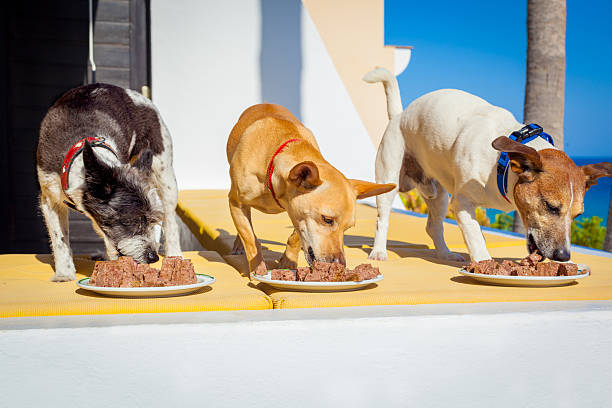
- Reward calm, sharing behavior between dogs extensively
When to Seek Professional Help
While many mild cases can be addressed through this protocol, consider professional guidance if:
- Resource guarding has resulted in bites, especially with broken skin
- You have children in the home
- Your dog guards multiple types of resources in multiple contexts
- Your dog shows unpredictable guarding with minimal warning
- You've tried this protocol with limited success
- You feel unsafe or uncertain about implementing the protocol
- The guarding is getting worse rather than better
Options include certified dog behavior consultants, certified applied animal behaviorists, or veterinary behaviorists—the latter can consider whether medication might help during behavior modification.
Common Questions About Resource Guarding
"Isn't resource guarding a dominance issue?"
No. Despite popular myths, resource guarding is about insecurity and the natural desire to maintain valuable resources, not about establishing dominance. Attempting to "show the dog who's boss" typically makes guarding worse by increasing the dog's insecurity.
"Should I make my dog wait while I pretend to eat from his bowl?"
This outdated approach typically creates more tension and distrust. Modern behavior science focuses on creating positive associations with your approach rather than asserting control over resources.
"Is it okay to let my dog keep high-value chews if they guard them?"
Safety comes first. During training, it's usually best to limit access to intensely guarded items. Once your dog shows improvement with counterconditioning, you can reintroduce these items in controlled circumstances.
"My dog only guards from certain family members. Why?"
Dogs often discriminate based on:
- Previous interactions (who has taken items in the past)
- Perceived predictability of the person
- Confidence in handling
- Size or movement style differences Everyone in the household should participate in the modification protocol once it's established.
"Will neutering/spaying help with resource guarding?"
While altering your dog has many benefits, it rarely resolves resource guarding specifically. Behavior modification is still necessary regardless of reproductive status.
Prevention: Building Trust Around Resources from the Start
For puppies or newly adopted dogs, these practices can prevent resource guarding from developing:
- Add good things to food bowls while dogs are eating
- Teach "drop it" and "leave it" as fun games with positive reinforcement
- Practice trading items of equal or greater value frequently
- Provide plenty of resources so there's less need to compete
- Respect your dog's possessions by not taking things unnecessarily
- Supervise interactions between dogs and children around resources
- Create positive associations with handling of valued items from an early age
Remember, prevention is much easier than treatment. Even with a dog who doesn't guard, these practices build trust and communication.
The Long View: Expectations and Management
Understanding realistic timelines and expectations helps maintain progress:
- Improvement is gradual, not immediate
- Progress may be non-linear with occasional setbacks
- Some management may always be necessary for severely guarding dogs
- Prevention remains important even after improvement
- The goal is safer, more predictable behavior, not necessarily perfect behavior
The foundation of success is changing your dog's emotional response, not just suppressing the guarding behavior. This takes time but creates lasting change.
At AutoDoggy, our AI-highly focused, personalized training plans training plans can analyze your dog's specific resource guarding patterns and create a customized modification protocol based on the types of resources guarded and the severity of the behavior. We provide day-by-day guidance to help implement these force-free techniques effectively.
Ready to help your dog feel more secure about their resources? Get your personalized resource guarding solution plan from AutoDoggy today.